The room is full of toys, yet your child still drags them into the living room. It isn’t always stubbornness: sometimes the room simply isn’t set up for play. Here is what to change.
Furniture and interior items
·
Child won’t play in their room? Possible reasons and what to change
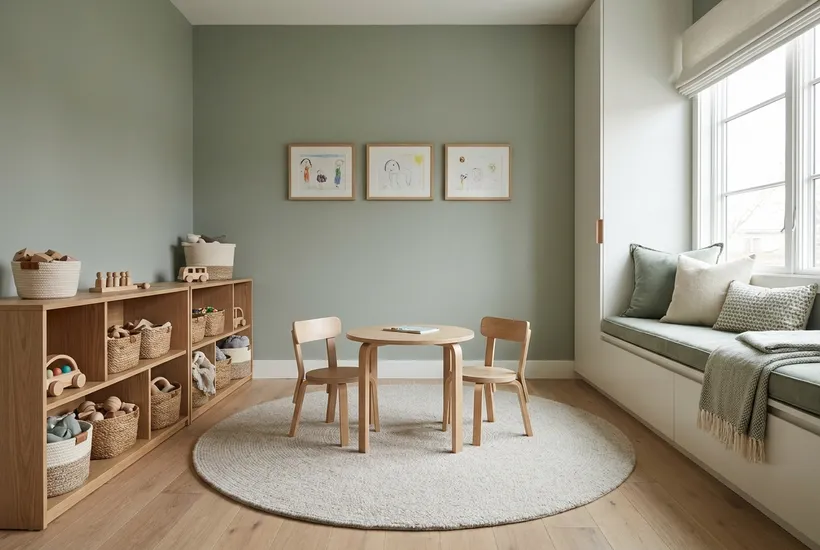
Parents invest in a beautiful kids’ room, and the little one plays in the kitchen at mum’s feet or spreads building blocks across the living room. Sound familiar? There can be many reasons, and one you can influence is how the room is set up. Below are ideas for a play area in the kids’ room: toys within reach, open floor space and a spot for an adult nearby.
Possible reasons
Many young children like to stay close to adults. If their room is at the far end of the corridor, playing there alone is boring and a little unsettling. And rooms are often furnished “for adult eyes”: toys up high, everything bright, little free floor space.
Where your child plays now: observe before you change anything
Before buying new furniture, spend a little time simply watching. Where does your child play most often, and who is nearby? Which toys do they take out on their own, and which do they ask you to reach? Where does play stop? Is it because it is uncomfortable to sit, too dark, too cramped or dull on their own? Jot it down briefly, without drawing conclusions about your child’s character.
These notes describe the setting, not the child, and point to concrete steps. If the building blocks end up in the living room, that is where there is floor space and adults nearby, and you can bring both into the kids’ room. If the books sit untouched on a top shelf, they may simply be out of sight and out of reach. If something beyond the room worries you, talk it over with a specialist: rearranging furniture is no substitute for their advice.
7 rules for a room children actually play in
1. A calm background
Bright walls and busy wallpaper are tiring. Choose soft, muted colours for the walls and keep the bright accents in toys, books and textiles, which are easy to change as your child grows.
2. Storage at child height
Low open shelves, baskets, boxes without heavy lids. A child should be able to take a toy out and put it back on their own.
3. Fewer toys on display
When everything is out at once, nothing gets played with. Keep some toys on the shelves, store the rest and rotate them from time to time: old ones become interesting again.
4. Open floor space
Children play on the floor. Leave space in the middle of the room, add a warm rug and place large furniture along the walls.
5. A hideaway
A tent, a niche, a playhouse above the bed or just cushions by the window. A small, sheltered spot gives a sense of security.
6. Zones for different activities
Set up a drawing table by the window, a soft corner for books and a space for building blocks. Even in a small room, zones help a child switch between activities.
7. Room for adults too
Add a comfortable armchair or pouf for a parent, and your child will happily stay in the room. Play together at first; soon they will get used to playing on their own.
Accessible storage and toy rotation: a shelf plan
It helps to think of the shelving in levels, based on your child’s height:
- Bottom shelves: what your child plays with independently, like a few sets in open baskets or books with their covers facing out.
- Middle level: things used less often or with a little help (board games, puzzles, the box of building blocks).
- Top shelves or a cupboard: anything that needs adult supervision, plus the reserve of toys waiting their turn.
One basket per type of toy, with a picture on the front showing what is inside, makes it easier for a child to take things out and put them back. When interest in a set fades, swap it for another from the reserve. Your child will show you the right rhythm; there are no fixed rules. Keep heavy items low, and anchor tall shelving to the wall (more on that below).
Floor space, reading and drawing: zoning a small room
In a small kids’ room, zones are created with furniture and rugs rather than partitions. Put the bed, wardrobe and shelving along the walls to free the centre for floor play. Place the drawing table near the window, where there is more daylight, with an easy-to-clean surface and a drawer for paper and pencils close by. A reading spot can be tiny: cushions or a beanbag, good light and a low shelf with books facing out. Zoning ideas for small rooms can be found in the residential interior design gallery.
When space is tight, a folding or drop-leaf table, a bed with storage drawers and a rug that marks out the play area all help. The sun in Cyprus can be very bright, so thick curtains or blinds in a child’s room help with both daytime naps and glare on the desk.
A place for adults and a calm background: start from real habits
Before adding an armchair, think about an ordinary day. Which adult spends the most time with your child, and what are they doing then? If you read at bedtime, you need a comfortable seat and a reading lamp. If you sit nearby answering messages while your child plays, a pouf or a bench against the wall with a view of the whole room is enough. The seat has to suit an adult’s back, or it simply won’t get used.
A calm background is also something to check in practice: look at the room by day and in the evening, in daylight and under lamps. If the walls, curtains and toys compete with each other, put some of the bright things out of sight and keep the accents where your child plays.
Frequently asked questions
How do I organise toys so my child can reach them on their own?
Keep everyday toys on low open shelves and in light baskets without heavy lids. Label the baskets with pictures, keep some toys in reserve and rotate them from time to time. Anchor tall shelving to the wall.
How can I leave room for play in a small kids’ room?
Place large furniture along the walls, choose a bed with drawers and a folding table, and keep the centre of the room clear, marked out with a rug. Things that aren’t needed every day are better stored outside the child’s room.
Should a kids’ room have a place for an adult?
Many children find it easier to play when an adult is nearby, so a comfortable seat for a parent is often worthwhile. Whether it is a reading chair or a pouf by the wall depends on your real habits.
Furniture that grows with your child
Adjustable desks and chairs, modular shelving and beds with drawers last for years. Makers listed under kids’ furniture in the Cozy catalog can help you choose or build solutions for your room. If you are planning the room from scratch or redoing the whole home, look at residential interior design: a designer can help you plan the zones, storage and free floor space for play.
Tall shelving units, chests of drawers and wardrobes in a child’s room should be securely anchored to the wall: children may climb them or pull drawers out. Use the furniture manufacturer’s fixing kit and follow its instructions; if you are unsure about the wall or the fixings, ask a professional to install them.
Furniture that grows with your child only helps if it is actually adjusted. From time to time, check the height of the desk and chair against your child, move things they use often to shelves they can now reach, and put anything that needs supervision higher up. Modular shelving and beds that can be taken apart and reassembled differently are easier to adapt to a new age. After every rearrangement, anchor the furniture to the wall again in its new place; if you need help, turn to a furniture assembly and repair professional.
Other articles
A custom kitchen: from measuring to installation
A made-to-measure kitchen fits the room perfectly, as long as every stage happens in the right order. Here is what goes on between the first measurement and the...
Furniture and interior items