There is no single figure for what a renovation costs: the total depends on the starting condition, the scope of work and what the quote actually includes. Here is how to break a quote down and compare offers for the same scope.
Turnkey construction and renovation
Renovation cost in Cyprus: what goes into a quote and how to compare offers
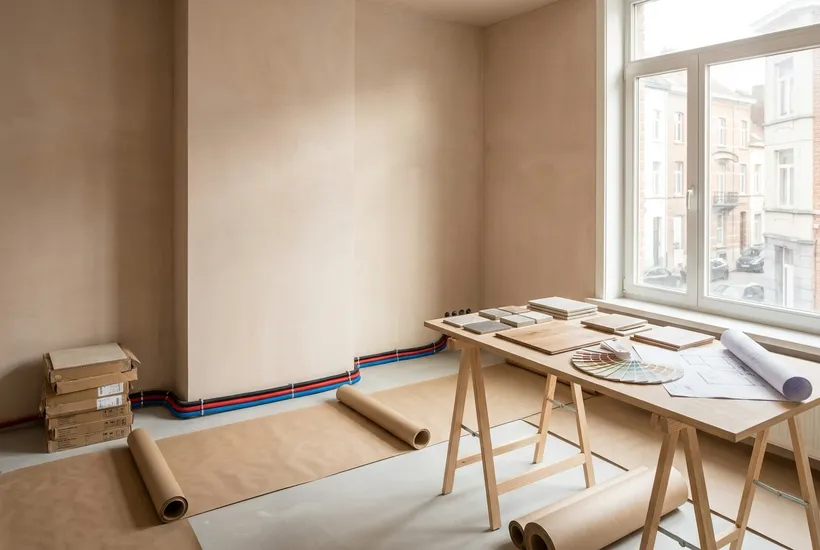
“How much will my renovation cost?” sounds like a simple question, but there is no honest one-number answer. Renovation cost in Cyprus, as anywhere, depends on the condition of the property, the scope of work, the materials you choose and what exactly the contractor has put in the quote. Two flats of the same size can need very different budgets, and two quotes for the same flat can be impossible to compare because they describe different work. Here is how to read a quote line by line, compare offers and avoid unexpected extras.
Define the starting point and the scope
Before you ask for a price, decide what kind of renovation you actually need. Everything else follows from that.
- Cosmetic refresh: painting, new flooring, lights and doors, new kitchen fronts. Services and layout stay as they are.
- Renovation with new services: rewiring, new water and drainage pipes, preparation for air conditioning, often levelling walls and floors. This work ends up hidden, but it has a big effect on the total.
- Renovation with layout changes: moving walls, opening up rooms, relocating the kitchen or bathroom. Design work and possibly approvals are added, and the risk of surprises during strip-out is higher.
Walk through the property with a professional before you request quotes: the state of the wiring, signs of leaks or damp, how level the walls and floors are, how old the plumbing is. The better the starting condition is described, the fewer “unexpected” jobs will appear along the way.
Break the quote into strip-out, first fix, finishes and fittings
A clear renovation quote is split into stages. That makes it easier to see what you are paying for and to compare offers from different contractors. Together, these stages make up what you pay for the renovation work.
Strip-out and preparation
Removing old finishes, tiles, sanitaryware and partitions, protecting what stays, and taking away the waste. Check whether waste removal and the final clean are included, as they are often left out.
First fix
Electrics, water supply and drainage, screed, plaster, levelling walls, waterproofing wet areas, pipe runs for air conditioning. You won’t see this work once the finishes are on, but it decides how long those finishes will last.
Finishes
Painting, tiling, flooring, ceilings, doors, skirting, sockets and switches. Here the price depends heavily on complexity: large-format tiles, intricate patterns or flush doors take more labour than simple solutions.
Fittings and materials
Sanitaryware, lighting, the kitchen, built-in furniture, appliances. Make sure you know who buys them: the contractor or you. If materials are listed as “to be confirmed” or without brands and models, the total cannot be judged in advance.
Why a price per square metre is misleading
It is tempting to estimate a budget from a price per square metre, but that number is an average that hides what matters. A small flat still has a whole kitchen and a whole bathroom, so per square metre it often costs more than a larger one. Likewise, what a two-bedroom flat or a mid-range renovation costs depends less on the number of rooms or the label than on how many wet areas, cables and pipes have to be replaced. And a “square metre” means different things to different contractors: floor area, wall area or a loosely defined package of work. Use it only as a starting point for a first conversation and make decisions based on a detailed quote. How much the result varies with the level of finish is clear from the gallery of completed renovation projects.
Kitchen and bathroom: why services and fittings change the total
These are the busiest rooms: water, drainage, electrics, ventilation, tiles, furniture and appliances all meet in a small space. A breakdown of kitchen renovation costs (or bathroom ones) is usually driven by:
- moving the sink, hob, shower or toilet, which means new pipe runs and drainage falls;
- waterproofing and preparing surfaces for tiles;
- made-to-measure kitchen units, the worktop material and integrated appliances;
- walk-in showers, concealed cisterns and concealed mixers;
- the cooker hood and bathroom extraction.
If you are planning a kitchen renovation or a bathroom renovation together with the rest of the home, ask for these rooms to be priced as separate sections. That makes it easier to see where you can save and where you shouldn’t. If a room is stripped back to bare walls, the gut kitchen renovation cost or the bathroom gut renovation cost depends mostly on first fix: to estimate bathroom renovation costs early, ask for plumbing and electrics to be priced as separate lines. For finished examples, see photos of completed bathroom renovations.
Compare two quotes for the same agreed scope
The most common mistake is comparing totals. One quote can be lower simply because it leaves out strip-out, waste removal or materials. To compare fairly:
- Prepare one written brief: floor plan, list of work, preferred materials or their quality level, photos of the current state.
- Send the same brief to every contractor and ask for quotes split into the same sections.
- Put the offers side by side line by line: task, quantity, material, who buys it.
- Mark items that one contractor includes and another doesn’t, and ask about them directly.
- Compare the terms too: payment stages, handover, warranty on workmanship, who handles waste removal and cleaning.
For example, one quote says “bathroom tiling: laying”, another says “bathroom tiling: surface preparation, waterproofing, laying, grouting”. The second costs more but describes the full job; the first is likely to grow as the work goes on.
Contingency, delivery and changes: separate the agreed price from extras
Even a detailed quote can’t cover everything that strip-out reveals. So:
- keep a contingency for hidden defects and changes, and agree its size with a professional after the survey;
- check whether delivery, carrying materials upstairs and storage are included; some finishes and sanitaryware on the island are ordered in, so ask about availability early;
- agree that any extra work starts only after its price is confirmed in writing;
- remember your own changes count too: a different tile or an extra socket also changes the quote.
How to renovate on a tighter budget without cutting quality
- Keep what is in good condition: working services, doors, kitchen carcasses that only need new fronts.
- Don’t move wet areas unless you have to.
- Choose standard sizes and simple tile layouts.
- Save on décor that is easy to replace, not on first fix and waterproofing.
- Make decisions before work starts: changes mid-project are the most expensive kind.
Questions to ask before you accept a quote
- Which work and materials are definitely included, and which are not?
- What happens if hidden defects turn up during strip-out?
- How are extras agreed and paid for?
- How are payments staged, and what is signed off at each stage?
- Is there a warranty on the work, and how are snags put right?
Frequently asked questions
What should a renovation quote include?
A list of work by section with quantities, materials with brands or at least a quality level, who buys them, strip-out, waste removal, delivery and cleaning, and how extra work is agreed.
Why doesn’t a price per square metre show the full budget?
It ignores the starting condition, how much plumbing and electrics the kitchen and bathroom need, the level of materials and what a particular contractor counts as a “square metre”.
How do I compare offers from two contractors?
Give both the same written brief, ask for quotes split into the same sections and compare them line by line rather than by the total.
Do I need an energy performance certificate when renovating?
You may need one when you renovate, sell or rent out a property. An energy performance certificate is issued by a qualified energy assessor after inspecting the home. When it is required and what it must contain depends on your situation, so check the current requirements with the competent authority before you plan the work or a sale.
You can find professionals for a full apartment renovation or individual jobs under construction and renovation. Describe your project on Cozy, get offers from several specialists and compare their quotes and portfolios. Cozy doesn’t carry out the work itself. It helps you find the right professional.
Other articles
How to choose a renovation contractor: checks and questions
A good contractor isn't the cheapest quote or the glossiest portfolio. It's a clear scope, comparable experience and agreements in writing. Here's how to choose...
Turnkey construction and renovation
Refresh your home in a week: a cosmetic renovation plan
A full renovation can drag on for months, but you can transform your home noticeably in seven days. Here is what to do, in what order, and how to keep to the sc...
Turnkey construction and renovation