A full renovation can drag on for months, but you can transform your home noticeably in seven days. Here is what to do, in what order, and how to keep to the schedule.
Turnkey construction and renovation
·
Refresh your home in a week: a cosmetic renovation plan
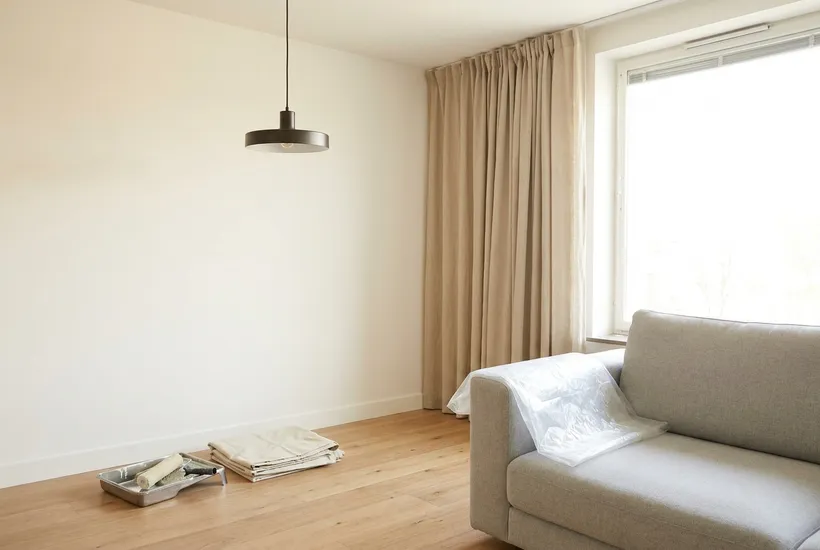
An apartment makeover in a week isn’t “let’s see how it goes”. It’s a well-prepared project. If you leave the walls, wiring and plumbing alone, you can completely change the look of a room or a small flat in a week.
What you can realistically do in seven days
- paint the walls and ceiling;
- lay new flooring (laminate or vinyl tiles);
- replace light fittings, sockets and switches in the same positions;
- update doors and cabinet hardware;
- hang curtains, shelves and pictures.
Changing the layout, replacing wiring and pipes, or tiling a bathroom is no longer cosmetic, so allow more time for those and look for specialists in turnkey construction and renovation. What fresh paint and smooth walls alone can do is shown in the plastering and painting project gallery.
Before you start: preparation is everything
Buy and deliver the materials in advance: paint, primer, flooring, skirting, light fittings. Waiting for deliveries is the main reason a “week” turns into a month. Book specific days with the tradespeople and settle the colours before day one. Take measurements before you buy (wall and floor areas, skirting lengths, opening sizes) and check what the tradespeople will bring themselves. Sort out access in advance too: keys, the hours when noisy work is allowed, where materials can be unloaded and where the rubbish goes; ask the building manager about the building’s rules.
Day-by-day plan
First day. Clear the room, remove old skirting and light fittings, cover whatever can’t be moved out.
Second day. Fill cracks and chips, sand, prime the walls and ceiling.
Third day. Paint the ceiling and the first coat on the walls.
Fourth day. Second coat. While it dries, prepare the floor base.
Fifth day. Lay the flooring.
Sixth day. Skirting, light fittings, sockets, hardware.
Seventh day. Clean up, curtains, textiles, furniture back in place.
This schedule is only a guide. Between filler, primer and coats of paint, allow the drying time given in the product’s technical data sheet; humidity and temperature in the room affect it, so go by the state of the wall rather than the calendar. If the surface turns out worse than expected once old finishes come off, preparation will take longer. Our wall painting guide covers preparing walls and choosing paint in detail.
Parallel tasks: hardware on its own, electrics on their own
While the paint dries, get on with jobs that create no dust and do not touch the walls: assemble shelves, prepare the new hardware, adjust cabinet doors. Do not schedule jobs that get in each other’s way on the same day: sanding dust settles on fresh paint and new flooring.
Treat replacing light fittings, sockets and switches as a separate job for an electrician. Even if the new points stay in the same places, this is work on the electrical installation and should be done by a qualified professional. It is easiest to group it into one visit after painting. You can find electricians under electrical works.
Finishing: cleaning, inspection and a snag list
Renovation leaves fine dust behind, and an ordinary clean may not be enough; if you have no energy left for it, book post-renovation cleaning. Then walk round the room with the tradesperson in daylight and under artificial light and check:
- the paintwork: streaks, missed patches, roller marks, edges along the ceiling and skirting;
- the floor and skirting: check that joints and thresholds are neat and that doors and drawers do not catch;
- light fittings, sockets and switches: does everything work;
- windows, floor and hardware: any paint splashes left.
Write anything that is not right on a snag list with photos, and agree when it will be fixed before the final payment.
How to keep to the schedule
- Choose materials that are in stock rather than made to order.
- Buy all the paint from one batch, with some to spare, because shades can differ between batches. Ask the seller to work out the quantity from your wall area and the coverage stated by the manufacturer.
- Don’t change decisions along the way: every “let’s also…” adds days.
- Check in with your tradesperson every day: problems are easier to solve straight away.
When to extend the schedule: humidity, hidden defects and deliveries
Sometimes the one-week plan should be paused and rescheduled. Stop and reassess if removing old finishes reveals hidden damage (deep cracks, rot or plaster coming away), if the walls turn out to be damp or mouldy, or if taking off sockets and light fittings exposes wiring problems. None of this can be painted over: have a qualified specialist find the cause first, and plan the painting and flooring once it has been put right.
Simpler things can stretch the schedule too: a coat that has not dried in time because of humidity, a delivery in the wrong shade or one that is late. It is better to move the dates than to paint over a coat that is still wet or lay flooring on an unprepared base.
Frequently asked questions
What can you realistically refresh in an apartment in a week?
Work that does not touch the walls themselves, the building services or wet areas: painting walls and ceilings, new flooring on a sound base, hardware, light fittings in the same positions, textiles and decor. How realistic this is in your case depends on the area, the condition of the surfaces and whether the materials are available.
Which jobs cannot be rushed to fit a seven-day schedule?
Surface preparation and the drying of filler, primer and paint between coats: rush them and the defects will show in the finished surface. Electrical work, plumbing and bathroom tiling do not belong in a one-week plan at all. They are a separate renovation with their own timeline.
What should you buy and agree before a cosmetic refresh starts?
Paint and primer from one batch, flooring, skirting, light fittings and hardware, choosing what is in stock. Agree the colours, the days each tradesperson will work, access to the apartment and the building’s rules on noisy work.
Find a specialist early
Good tradespeople are often booked up in advance. For walls and ceilings, look for specialists in plastering and painting. Describe the job and the timing in an order on Cozy, and specialists will respond with their offers.
Other articles
How to choose a renovation contractor: checks and questions
A good contractor isn't the cheapest quote or the glossiest portfolio. It's a clear scope, comparable experience and agreements in writing. Here's how to choose...
Turnkey construction and renovation
Renovation cost in Cyprus: what goes into a quote and how to compare offers
There is no single figure for what a renovation costs: the total depends on the starting condition, the scope of work and what the quote actually includes. Here...
Turnkey construction and renovation