A beautiful garden doesn’t have to mean weekends with a mower and a hose. Here is how to plan a garden that almost looks after itself.
Landscape design and outdoor works
·
A garden that doesn’t eat your weekends: 8 landscape designers’ tricks
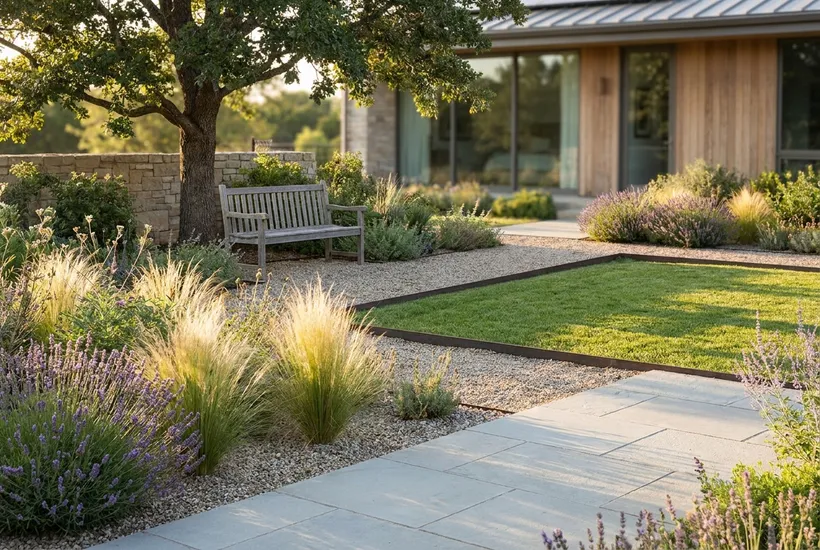
The most popular gardens in landscape designers’ portfolios have one thing in common: they look well kept, even though their owners don’t spend every free hour in them. The secret is not luck but planning: knowing how to design a garden around the way you use it. The low-maintenance garden ideas below start with the plan, not with buying plants. No garden is entirely care-free, but the routine work can be cut down.
1. Start with “how will you live in the garden?”
Where you’ll have breakfast, where the children play, where laundry dries, where the car goes. A garden built around real routines doesn’t need constant redoing.
2. Less lawn, less work
Lawn is the most labour-intensive part of a garden: mowing, watering, feeding. Keep it where people actually walk and play, and use paving, gravel and planting beds elsewhere. Where you do want a lawn, specialists in lawn and turf installation will prepare the base and lay it properly.
3. Perennials instead of annuals
Annuals have to be planted every year. Perennials, shrubs and grasses establish once and look better every season. Planting ideas from real gardens are in the garden design and planting gallery.
4. Plants that suit the climate and the spot
A plant that likes your soil, sun and rainfall won’t need constant attention. Ask a garden design and planting specialist about local drought-tolerant species: they cope with heat and save water.
The same plant behaves differently against a south-facing wall, in the shade of a tree and on a windy slope. Before you buy anything, mark on a plan where the sun lasts all day, where it turns shady in the afternoon, where water collects after rain and where the sea breeze reaches. With that plan in hand, ask a specialist for a list of plants proven in similar conditions in Cyprus rather than a generic list from the internet; if you are unsure about the soil, have it checked before planting.
5. Mulch on every bed
A layer of bark, wood chips or gravel keeps moisture in, stops weeds and looks tidy. It noticeably reduces the amount of weeding you need to do.
6. Drip irrigation on a timer
Water goes straight to the roots instead of evaporating from the leaves. A timer switches the system on early in the morning, so the garden is watered even when you’re away.
7. Clear edges
An edging strip between lawn and bed, crisp path edges. Edges keep gravel and grass where they belong and make even a simple garden look neat.
8. Paths where people walk
See where paths have already been worn and pave them. Large slabs with gaps for grass or gravel look natural and need little care. Examples of paths and paving are collected in the landscaping and outdoor projects gallery.
Mulch and edging: compare upkeep, heat and cleaning
Mulches differ, and each has its own character. Bark and wood chips look soft, hold moisture well and break down over time, so the layer needs topping up. Gravel and crushed stone last longer, but in full sun they heat up and radiate warmth onto nearby plants and paths. Leaves and debris show up on gravel and have to be cleared, while in bark they are less visible and slowly rot down; on a windy plot, light mulch can blow away.
Edging decides how tidy it all looks. Metal or plastic strips are barely visible; stone or concrete kerbs stand out more and hold gravel along a path more firmly. Choose the material that is easy to trim along and sweep, not the one that looks best in photos.
Drip irrigation: zones, maintenance and checks before you travel
It helps to split the system into zones by water needs: lawn, beds, shrubs and pots on the terrace all drink differently, and one schedule for everything usually means some plants are overwatered while others dry out. A separate valve for each zone lets you adjust watering by season without touching the rest.
Drippers clog, pipes get nicked during weeding and filters fill up, so check the system at the start of the hot season and after any work in the garden. Before you go away, run it manually and walk every zone: is water coming out everywhere, are there puddles or dry patches, does the timer have fresh batteries? Ideally a neighbour or gardener can look in and shut off the water if there is a leak. Watering rules and restrictions during water shortages in Cyprus can change, so check them with the local authorities or your water supplier.
A seasonal care plan
Even a low-maintenance garden needs attention; it just becomes predictable. Draw up a short seasonal plan with your designer or gardener:
- Before the heat: check and flush the irrigation, top up the mulch, cut back anything spilling onto paths.
- In summer: keep an eye on watering and on plants suffering in the heat, and hold off on new planting.
- In autumn: once the heat eases, it is often a convenient time to plant and transplant (check the timing for your plants with a specialist); clear leaves from gravel and paths.
- In winter: after rain, see where water runs off and whether paths and edges have washed out, and adjust the watering for cooler weather.
Frequently asked questions
Can I have a garden with less lawn?
Yes. Keep lawn where people actually play or relax, and give the rest to paving, gravel, mulched beds or ground-cover plants. The more compact and simple the shape of the lawn, the easier it is to mow and water.
How do I choose plants for a sunny plot in Cyprus?
Start by observing: where the sun lasts all day, where there is shade, what the soil is like and whether the sea wind reaches. Then ask a landscape designer for a list of drought-tolerant plants proven in similar local conditions, and group them by water needs so the irrigation is easier to set up.
What should I check in the drip irrigation before going away?
Run the system manually and walk every zone: are the drippers working, are there leaks or dry patches, does the timer switch on and are its batteries fresh? Agree on who can turn off the water if something breaks.
Plan it with a professional
Before planting, a landscape designer will take into account the slope, the soil and the utilities, and will tell you what to plant now and what to leave for next season. Find a specialist in landscape design and outdoor works in the Cozy catalog.