


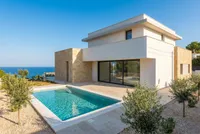




Lawn and turf installation means creating an even, dense grass surface on a prepared base, either by sowing seed or by laying rolled turf. Lawns go in around villas and townhouses, around pools, in play areas and at hotels and commercial properties in Cyprus. On Cozy you can find landscaping contractors and lawn specialists and look at the lawns they have already laid.
A lawn’s quality depends less on the grass than on the preparation: a level base, a fertile top layer, drainage and properly set-up irrigation. Mistakes at this stage stay visible for a long time: puddles, bald patches, bumps and weeds.
The lawn is only part of a garden. If you want to plan the whole plot (planting, beds, hedges and grass-free areas), see garden design and planting.
How a lawn is installed
- clearing the area of debris, stones, roots and weeds;
- levelling and grading with a fall for drainage, plus drains where needed;
- bringing in topsoil, improving the soil and rolling the base;
- installing automatic irrigation before the lawn goes down;
- sowing seed, or laying turf tightly with staggered joints, then rolling;
- initial watering and care instructions for the early period.
Irrigation is installed before the lawn; otherwise pipes have to be run through the finished surface. Sprinklers are chosen to cover the whole area without dry spots and without soaking paths and house walls.
Seeded lawn or rolled turf
A seeded lawn is cheaper and lets you choose a grass mix for the site, but it germinates and thickens gradually, and while it grows you cannot walk on it and need to keep weeds in check. Rolled turf is ready-grown sod: the area turns green as soon as it is laid and can be used once it has rooted. It costs more and needs precise base preparation and generous watering at first. Turf is the usual choice for small areas, slopes and places where a lawn is needed quickly.
Lawns in the Cypriot climate: watering and care
Lawns are the thirstiest part of a garden, and on an island with hot, dry summers that matters. Warm-season, drought-tolerant grasses suit local conditions, for example Bermuda grass, zoysia or paspalum; the specialist will advise what grows best on your plot, including spots in shade or near the sea. It often makes sense to keep the lawn compact and give the rest of the area to drought-tolerant planting, gravel and paving. After handover a lawn needs regular watering, mowing, feeding and aeration, so decide in advance who will take care of it.
What to look for in a lawn installer
Look at the portfolio: photos not only right after laying but some time later, when you can see how the lawn has established. Client comments are most telling when they mention how flat the finished surface is, whether the sprinklers reach every corner and how well the grass rooted. Ask what the price includes: ground preparation, topsoil, irrigation, the turf itself and waste removal.
For an accurate quote, send the size of the area or a site plan with photos. Describe what covers the ground now, where the water comes from and which parts get sun or shade, and explain what the lawn is for: for relaxing, children’s play, dogs or simply for looks.