A fence sets your privacy, shelter from the wind and the first impression of the house, and in strong sun and sea air materials age very differently. Here is how block walls, metal, slatted screens, wood, composite and hedges compare.
Fences and railings
Garden fence ideas: choosing walls, railings and screens
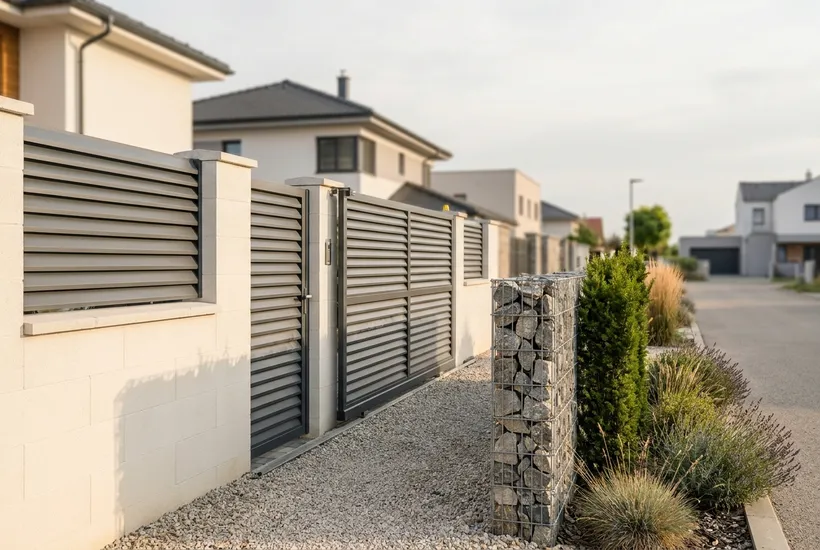
Decorative garden fence ideas usually start with a picture, but a fence has real work to do: it marks the boundary, screens the garden from the street, takes the wind and sets the first impression of the house. In Cyprus the climate adds its own test. Strong sun bleaches paint and wood, sea air near the coast corrodes metal, and many plots already have a block wall, so the choice is often about what to add on top. Below we compare walls, metal, slatted screens, wood, composite and hedges, and explain how to match the gate and find the right installer.
What the fence must do: privacy, security and wind
Before choosing a material, decide what the fence has to do on your plot. The answer sets its height, density and structure.
- Privacy. If the terrace, pool or garden can be seen from the street or a neighbour’s windows, that stretch needs a solid or nearly solid screen. Where there is a view worth keeping, an open railing is enough.
- Security. For children and dogs, height matters, as does avoiding horizontal rails that are easy to climb, and a gate with a proper lock.
- Wind. Solid walls take the full wind load and create turbulence behind them. A slatted fence with gaps or a hedge slows the wind more gently and puts less strain on the posts and footings, which is noticeable on open plots and near the coast.
- Sun and shade. A tall fence on the south side shades beds and the terrace; in summer that shade can be welcome. Decide where you want shade and where you want light.
- Maintenance. If the house is let or you live abroad and visit only now and then, choose materials that don’t need painting every year.
Height, position relative to the boundary and the look of a street-facing fence may be subject to local requirements. Check them with a specialist before you order, not after installation.
Block walls and rendered boundary walls
A rendered block wall painted to match the façade is a familiar choice for Cyprus houses. It is solid, cuts street noise, doesn’t rot and needs little more than repainting from time to time. The downsides are weight, which calls for a sound footing, and the fact that a solid wall takes the wind head-on. A common approach is a low block plinth with metal or slats on top, and an existing wall can often be repaired and extended rather than demolished; ask the installer to check that it can carry the extra structure and wind load.
For a more natural look, there is the gabion wall, made of wire baskets filled with stone. It is heavy and needs a firm, level base; the mesh should be coated, because bare wire rusts near the sea and stains the stone. Stone also gets hot in the sun and releases heat slowly, so think twice before placing it right next to a seating area.
Metal railings, gates and slatted aluminium
Welded railings, box-section steel, wrought-iron details and sheet panels are strong and let you choose any degree of openness. Near the sea, steel corrodes faster, so ask how it will be protected. The answer should cover hot-dip galvanising with primer and powder coating, plus treatment of welds and cut edges. Slatted aluminium doesn’t rust the way steel does and is lighter, which makes it popular for modern horizontal screens, but it is softer and dents more easily. Choose the slat gap from a sample panel: the narrower the gap, the less you see, yet air still passes through. Perforated metal panels add a pattern of shade on the path. You can see how these solutions look on real plots in the fence and railing project gallery.
Gates take the most wear. Match them to the fence in material, colour and slat spacing; allow space along the fence for a sliding gate or room to swing for a hinged one, remembering that hinged leaves can catch the ground on a slope. Even if a motor comes later, lay the cable and plan its position now, and near the sea choose corrosion-resistant hinges, rollers and fixings. Automated gates can be handled by specialists in blinds, shutters and gates.
Wood and composite screens in strong sun
Wood is warm and attractive, but in a hot, dry climate it greys quickly, dries out and needs regular oiling or painting. It suits owners who are happy to maintain it. Wood-plastic composite boards look like timber, don’t rot and need no treatment. In strong sun they may gradually fade, and dark shades get hotter, so ask the supplier whether the specific product is meant for outdoor use in direct sun. Both work well as slatted screens on a low rendered wall, which keeps the boards away from wet ground.
Front garden fence ideas and short garden fences
Front garden fence ideas tend to favour openness, and short garden fence ideas work best where you want to mark the boundary without hiding the house. A low rendered wall with a simple railing, a knee-high slatted fence along a gravel strip or a clipped hedge keeps the frontage tidy and friendly. These are also the most useful fencing ideas for the garden when you need to separate a play area or vegetable beds.
Hedges give shade, soften noise and dust from the road and look gentler than any wall, but they take several seasons to close up. Choose plants that tolerate heat, strong sun and, near the coast, salty wind; install drip irrigation from the start, especially for a rental or a house you visit rarely; and allow for the hedge’s mature width and regular trimming. Specialists in garden design and planting can suggest species that suit your plot.
Who to hire for fencing and boundary walls
Fences look simple, but how long one lasts depends on the installation: footings, post fixings, metal protection and drainage after winter rains. Before you order:
- describe the plot: perimeter length, slope, any existing wall, distance to the sea and whether you need an automated gate;
- ask for two or three material options and how each will behave on your plot;
- check how the footings and posts will be built, how welds will be protected and what maintenance will be needed;
- ask about local requirements for fence height and position;
- agree who removes the old fence and the rubbish.
Post your request on Cozy with photos of the plot and compare offers from fencing and railing specialists: their profiles, reviews and completed work.
Frequently asked questions
What fence lasts longest in strong sun?
Rendered block walls, powder-coated aluminium and good outdoor-grade composite generally cope best with strong sun, because they need no oiling and fade slowly. Light colours heat up less and show fading less than dark ones. Untreated wood greys and dries out fastest. Whatever you choose, ask the supplier whether the finish is intended for direct sun.
Is a wall or a fence better for privacy?
A solid wall gives complete privacy and cuts noise, but it is heavy and takes the full force of the wind. A slatted fence with narrow gaps hides most of the garden while letting air through. A common compromise is a low rendered wall with a slatted screen on top, or a hedge planted inside.
Does metal fencing rust near the sea?
Unprotected or poorly painted steel rusts noticeably faster near the coast, usually starting at welds, cut edges and fixings. Hot-dip galvanising with powder coating slows this down considerably, and aluminium does not rust the way steel does. Choose corrosion-resistant hinges and screws too, and inspect the fence after each winter so small spots can be treated early.
Can a screen be added on top of an existing wall?
Often yes: slats, railings or panels are commonly fixed to an existing block wall or set on posts behind it. First, an installer should check the wall for cracks, its footing and whether it can carry the extra height and wind load. If the wall is shared with a neighbour, agree the plan with them first.