


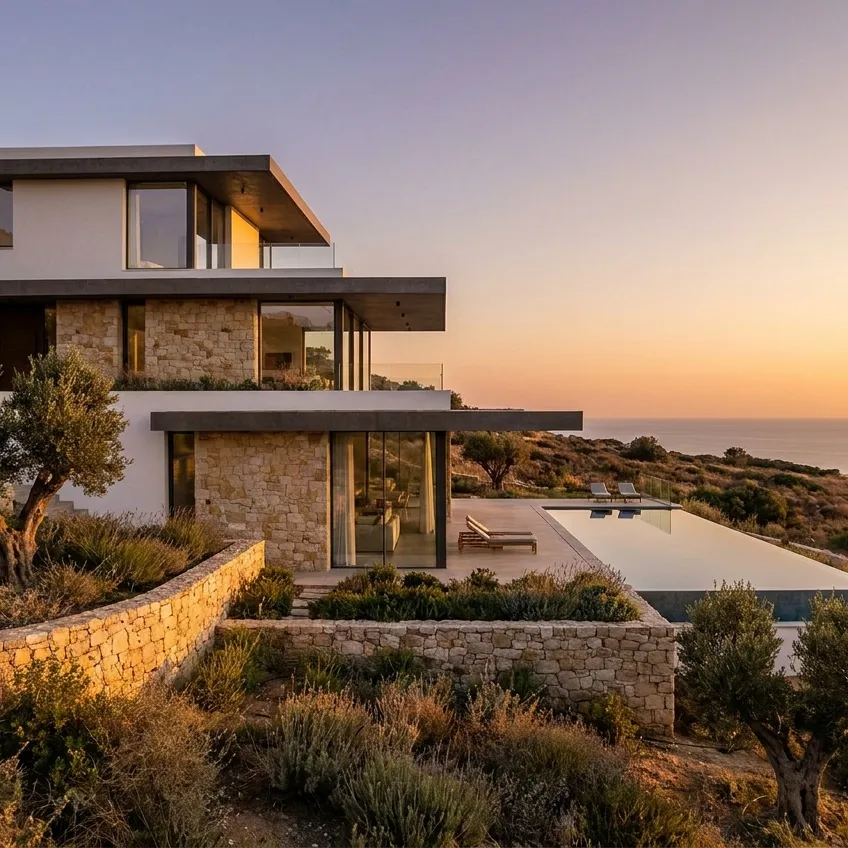

Fencing in Cyprus does several jobs at once: it marks the boundary of your plot, screens the garden from passers-by and wind, keeps children and dogs in and makes terraces, stairs and level changes safe. The Cozy catalogue brings together contractors and companies that fabricate and install fences, gates, railings and balustrades for villas, townhouses, apartments and commercial properties.
A good fencing offer usually comes with material options, so you can weigh galvanised steel against aluminium or composite for the same run.
Start with the purpose. A solid fence of rendered blockwork or metal sheeting gives privacy, mesh and grilles let air and light through, and decorative metalwork shows off the architecture of the house. Secure fixing and height matter most on balconies and flat roofs as well as terraces and stairs, and the height requirements are best checked with a designer or the local authorities. If the railing is part of a deck or canopy, it makes sense to build it together with pergolas, gazebos and decks.
What the work includes
- measuring and setting out the fence line, then choosing the material and height;
- posts and foundations: posts set in concrete, a strip footing or a block plinth;
- fences in metal, mesh, timber, composite, blockwork and stone;
- swing and sliding gates and pedestrian gates; gate automation is usually connected by a separate specialist;
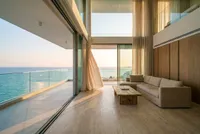
- railings and balustrades for stairs, balconies, terraces and flat roofs in metal, stainless steel or glass.
Materials that cope with sun and salt
In Cyprus a fence stands in direct sun and, near the coast, in humid, salty air as well. Mild steel has to be primed and painted or ordered hot-dip galvanised and powder-coated, otherwise rust appears quickly. Aluminium and stainless steel suffer less from corrosion, timber needs regular treatment and composite is almost maintenance-free. In windy spots a solid panel has to be designed for wind load, or you can choose a design with gaps.
The boundary and installation
Before putting up a fence, make sure you know where the boundary runs: a land surveyor establishes it from the plot documents, not the installer by eye. Check whether the foundations, removal of the old fence and waste disposal are included in the price. Railings on level changes need secure fixing to the slab or wall without damaging the waterproofing. Height limits and permits for boundary fences vary, so ask the municipality before ordering.
Choosing a fence and railing installer
Look for work in the portfolio with a similar material and task: a fence around a villa, glass railings on a terrace or a stair balustrade. Read reviews about the quality of welding and painting and how the fence looks after a couple of seasons, and pay attention to the rating and photos of finished projects. Ask who fabricates the metalwork (the contractor or a workshop) and what finish is used.
For a fence, the installer needs the plot plan or the length of the run, photos of the site and any slopes, plus how high and how private you want it and where the gates go. Your address in the order helps reach contractors who cover your area.