Painting seems the simplest stage of a renovation, yet it is exactly where careful work and rushed work look most different. Here is how to choose paint, prepare the walls and test a colour.
Interior finishing
·
Painting walls: how to get a smooth, long-lasting finish
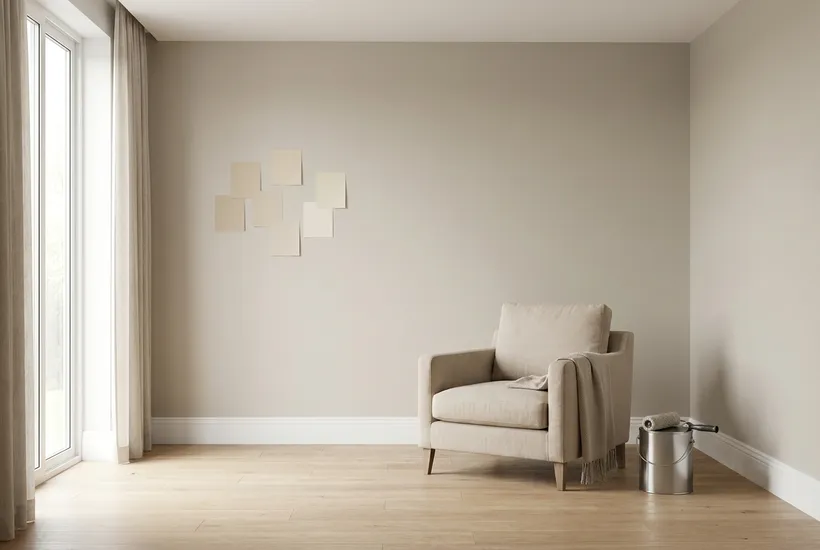
Paint is the quickest way to transform a room. But it has one quirk: it does not hide flaws in a wall, it emphasises them. So when you work out how to paint a room, knowing how to prepare walls for painting matters as much as the paint itself.
Sheen and washability: read the technical data sheet
For walls in living spaces, water-based emulsion paints are the most common choice: they have almost no smell, dry quickly and vary in how well they stand up to washing. Look at two things: scrub resistance, meaning how often the wall can be washed, and the sheen level.
- Dead-flat matt paint hides small imperfections and looks refined, but copes less well with washing.
- Matt and silk-matt finishes are the all-round choice for living rooms, bedrooms and hallways.
- Semi-gloss and gloss paints wipe clean easily but show up every unevenness in the surface. They are used on doors, skirting boards and wherever walls get knocked often.
Compare paints by their technical data sheet rather than by the name and claims on the tin: it gives the washability class, sheen level, coverage, drying time between coats and application conditions. Ask the seller for it or find it on the manufacturer’s website. In the hot months, check the permitted application temperature and avoid painting a wall in direct sun unless the manufacturer allows it.
Surface, cracks and primer
The wall is cleaned of dust and flaking old paint, cracks and holes are filled, then it is skimmed and sanded. Next comes primer: it evens out how absorbent the surface is, so the paint goes on uniformly without patches. Before painting, check the wall with raking light (a lamp shining along the surface), and every unevenness will show at once. Furniture and floors are covered with sheeting, and the edges along the ceiling and skirting with masking tape.
Look at cracks separately. Fine cracks in old finishes are filled during preparation. But if a crack comes back after repair, widens or runs along the joint between different parts of the structure, do not paint over it: have a specialist assess the cause. A wall with plaster coming away or signs of damp is not ready for painting either.
How to test a colour
A colour almost always looks different on a sample card and on the wall. Buy a tester and paint two coats on an area at least the size of a large sheet of paper, ideally on several walls. Look at it in the morning, during the day and in the evening under artificial light. Remember that over a large area a colour looks brighter and more intense than on a small sample. Strong daylight on a sunny wall and warm lamps in the evening also change how a shade reads, so judge the tester where the colour will actually go, and only once it has dried. For colour ideas in real rooms, browse the wall painting and plastering gallery.
Bathrooms, kitchens and other humid areas
For humid rooms, choose paints the manufacturer recommends specifically for those conditions. How washable a particular paint is and whether it contains mould protection is stated in its technical data sheet, so check it rather than assume. Ventilation is just as important, because no paint will save a wall that stays damp all the time. Areas that get splashed directly, such as next to the shower or behind the sink, are still better finished with tiles or glass.
Choosing a coating is not the same as removing the cause. If damp patches or mould keep coming back, paint for humid rooms will not stop them: a specialist needs to find and fix the source of the moisture first, and the wall needs to dry out. Read more in our article on damp and mould in Cyprus homes. If moisture builds up because of poor air exchange, talk to specialists in ventilation and air conditioning.
What a painter does that DIY skips
- Brings the surface to a truly flat finish and checks it with raking light.
- Matches the primer and paint to the type of wall.
- Paints continuously with a wet edge so no joins or stripes remain.
- Leaves the full drying time between coats.
- Cuts in neat, clean lines along the ceiling, skirting and architraves.
Application and sign-off: drying, streaks and edges
Drying time between coats and before the finish reaches full strength depends on the paint as well as on temperature and humidity, so go by the technical data sheet rather than general advice. Do not wash the walls or push furniture against them before the manufacturer allows. When signing off the work, look at the walls under raking light and normal light:
- even colour and sheen, with no streaks, patches or roller marks;
- corners and areas behind radiators fully covered, with no old colour showing through;
- crisp lines along the ceiling, skirting, architraves and around sockets;
- no filler showing as patches and no visible cracks;
- no drips or splashes on the floor, windows or hardware.
Point out any snags straight away, while the painter is there: touching up is easier while paint from the same batch is still left.
Frequently asked questions
Do walls need primer before painting?
Usually yes: primer evens out how absorbent the surface is and improves adhesion, so the paint goes on evenly without patches. Which primer suits your surface and paint is stated in the paint’s technical data sheet.
How can I check a paint colour before doing the whole room?
Buy a tester and apply two coats over a large area, ideally on several walls. Look at it in the morning, during the day and in the evening under artificial light, and compare only once it is dry: wet paint looks different.
Can damp-resistant paint fix a wall that is always damp?
No. This kind of paint is designed for higher humidity in the room, but it does not remove the cause of the damp. If a wall stays damp, first have a specialist find and fix the source of the moisture, let the wall dry out, and only then paint.
A small room is perfectly manageable on your own. But if the walls are uneven, the ceilings high or the job covers the whole home, a painter will save you time and effort. You can find specialists in plastering and painting in the Cozy catalog.
Other articles
How to choose tiles for the bathroom and kitchen
Tiles are laid to last, and redoing them is costly. Here is what to look at when choosing (material, size, slip resistance, grout and layout) and the mistakes p...
Interior finishing