Tiles are laid to last, and redoing them is costly. Here is what to look at when choosing (material, size, slip resistance, grout and layout) and the mistakes people make most often.
Interior finishing
·
How to choose tiles for the bathroom and kitchen
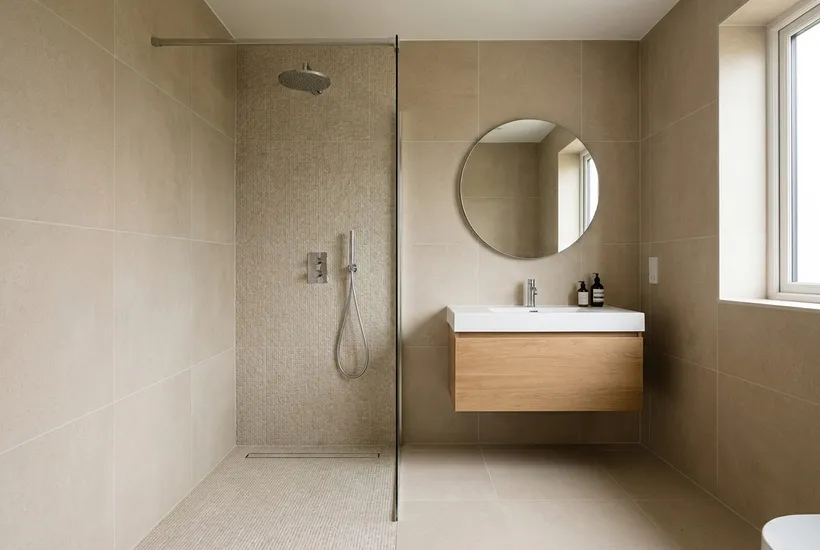
Tiles are one of the few finishes that last for decades. That is why it pays to choose them not only by the attractive picture in the showroom, but by how they will behave in a real bathroom or kitchen: under water, underfoot and next to the hob.
Whether you are gathering bathroom tile ideas for a turnkey bathroom renovation or choosing a splashback as part of a turnkey kitchen renovation, the same questions apply: material, surface, grout and layout.
Material
- Ceramic tiles are light, affordable and well suited to walls. For floors, use only tiles specifically rated for floor use.
- Porcelain tiles are denser and stronger and absorb almost no water. They work on both floors and walls, including kitchen splashbacks and shower areas.
- Natural stone is beautiful but porous: it needs sealing and careful cleaning, and acids and some cleaning products can stain it.
Floors and walls: different demands
Wall tiles carry no load from footsteps or furniture, so both lightweight ceramic and gloss finishes work on walls. Floor tiles have to do more: withstand load and wear and still not be slippery, especially where the floor gets wet. Before buying, check in the technical data sheet what the manufacturer intends the tile for (floors, walls or both), and never lay a wall tile on a floor.
Think about cleaning, too. With hard water, limescale and streaks show more on gloss and dark plain surfaces; light matt tiles hide them better but take a little longer to clean. For a floor by the door to a terrace or pool, where sand and water get carried in, ask the seller whether the tile suits that spot.
Size and surface
Large formats mean fewer joints and make a room look bigger, but they need a perfectly flat substrate and an experienced tiler. On a shower floor that slopes to a drain, small tiles or mosaic are easier because they follow the fall more readily. Slip resistance matters for a bathroom floor: a glossy finish on a wet floor is dangerous. Check the slip rating and the areas the tile is intended for in the manufacturer’s technical data sheet, which the seller can provide. Keep the trade-off in mind too: matt and textured surfaces are a little harder to clean. How different formats and finishes look once laid is easy to see in the tiling and mosaic project gallery.
Grout
Joints are far more noticeable than they seem in the showroom. Cement-based grout is the familiar choice and easier to work with, but it absorbs dirt and darkens over time. Epoxy grout absorbs almost no water or stains, which makes it good for showers and kitchen splashbacks, but it is harder to apply. Grout matching the tile gives a calm surface; a contrasting one highlights the pattern, and every imperfection in the laying along with it.
Junctions: where a flexible joint is needed
Grout fills the joints between tiles, but not every junction should be rigid. Where tiles meet a bath, a shower tray, another floor finish or the adjoining wall in a corner, the surfaces can move differently and a rigid joint may crack. In those places a flexible sealant matched to the grout colour is usually used.
- Ask the tiler which junctions will be flexible: internal corners, along the bath and shower tray, at the edge of other floor finishes.
- For wet areas, check that the sealant is made for bathrooms and resists mould.
- Bear in mind that flexible joints may need renewing over time: this is normal maintenance, not a defect.
Layout
Before you buy, ask for a layout plan showing where the full tiles and the cut ones will fall. A good layout hides narrow slivers in the corners, aligns joints with the centre lines of fixtures and niches, and takes sockets and water outlets into account. It also tells you how many tiles you need: allow extra for cuts and breakage, and keep a few spare for future repairs.
Ordering and delivery: shade, size and spare tiles
Once you have chosen a tile, make a tile card: manufacturer, collection, product code, size, finish, slip rating from the data sheet, plus the batch number and calibre if they are printed on the box. With this card it is easier to check the delivery and buy more tiles later.
- Work out spare tiles from the layout, not by eye: a room with niches, boxed-in pipes and diagonal laying needs more cuts than a simple one.
- Order the full quantity at once and from one batch: another batch may differ slightly in shade and size.
- On delivery, check the product code, batch and calibre on every box, open several boxes and lay tiles side by side in daylight.
- Look for chips and cracks, and report any problems to the seller before tiling starts.
Common mistakes
- Buying tiles from different batches: the shade may differ.
- Laying glossy tiles on a bathroom floor.
- Choosing a large format for uneven walls.
- Forgetting the waterproofing under the tiles in the shower area.
- Not keeping any spare tiles.
Frequently asked questions
How does choosing floor tiles differ from choosing wall tiles?
Floor tiles must withstand load and wear and not be slippery, so choose them from the data sheet: intended use, slip rating, wear resistance. On walls, look, weight and ease of cleaning matter more, and both ceramic and gloss finishes work. Tiles the manufacturer intends for walls only don’t go on the floor.
How do I calculate spare tiles for a complex layout?
There is no universal percentage: the spare depends on the tile size, laying pattern and shape of the room. Ask the tiler or seller to draw a layout and count whole tiles and cuts from it, then add a margin for breakage and a few tiles for future repairs. The more niches, boxed-in pipes, corners and diagonal rows, the more cuts.
How do I choose a tile surface for a wet area?
For shower and bathroom floors, look for tiles the manufacturer approves for wet areas, with a suitable slip rating on the data sheet: gloss on a wet floor is dangerous. On a shower floor sloping to a drain, small formats and mosaic follow the slope more easily, but there are more joints to look after. For shower walls, a smooth tile works well and is easier to clean of limescale.
Even the best tile is let down by careless laying, so the tiler matters as much as the material. You can find an experienced tiler under tiling and mosaic in the Cozy catalog.
Other articles
Painting walls: how to get a smooth, long-lasting finish
Painting seems the simplest stage of a renovation, yet it is exactly where careful work and rushed work look most different. Here is how to choose paint, prepar...
Interior finishing