Where the sun shines most of the year, a window has to let in light but keep out the heat. Here we look at frames, glazing, shading and installation.
Windows, doors, balconies
·
Windows for a sunny climate: what to look for
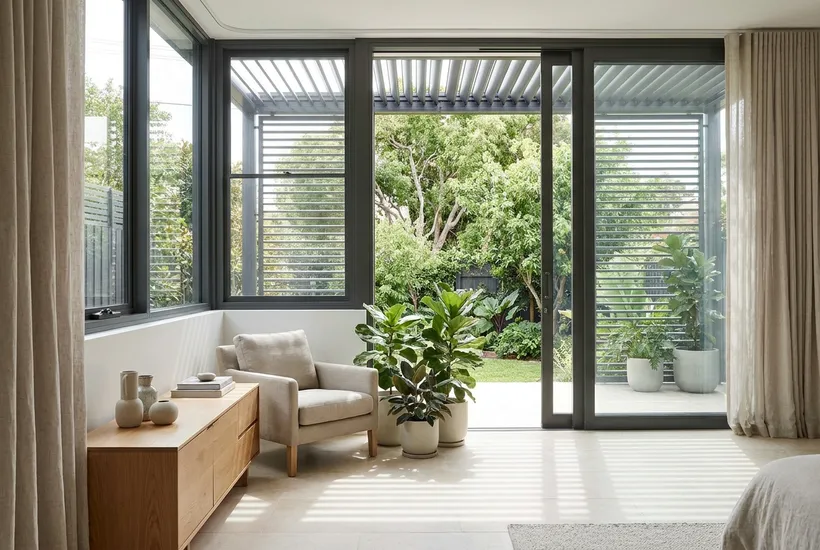
In a hot climate, windows work differently than in the north. The main task is not so much to keep heat in during winter as to keep it out in summer while preserving light and views. This choice affects how hard the air conditioning has to work and how comfortable the house feels during the day.
Frame material
- PVC is an affordable option with good thermal insulation. In direct sun, choose a profile designed for heat and UV exposure; dark colours heat up more, so check with the manufacturer whether the profile allows such a finish.
- Aluminium with a thermal break is strong and allows slim frames and large sliding systems. Without a thermal break, an aluminium frame conducts heat inside, so this point is a must.
- Wood is pleasant to the touch and beautiful, but on the sunny side its finish will need regular renewal. A compromise is wood-aluminium windows with external aluminium cladding.
Glass and solar control
In a hot climate, the solar control properties of the glazing matter most. Multifunctional or selective glass reflects a noticeable share of the sun’s heat while taking very little light. When comparing quotes, ask about two values: the solar factor (how much heat gets through) and light transmission (how much light). A good combination is a low solar factor with high light transmission. Heavily tinted or mirrored glass keeps the heat out but makes the room dark and distorts the colours outside.
Noise and safety: when to consider laminated glass
Laminated glass is made of panes bonded with an interlayer: if it breaks, the fragments stay on the film instead of scattering across the room. It adds safety and helps to dampen noise, so it is worth considering for the ground floor, for windows facing a busy street and for large glass doors onto a terrace.
- Ask the supplier where in the glazing unit the laminated pane will go and how this affects the solar factor and light transmission.
- If you have children, ask which glass is recommended for low windows and glazed doors.
- For a window onto a noisy road, remember that quietness depends on the whole window, including seals and the installation joint, not only on the glass.
Glazing in certain parts of a home may be subject to rules, so check them with your designer or the local authorities.
External shading
Shading outside works better than shading inside: it stops the sun before it reaches the glass. Curtains and internal blinds block light, but the heat is already in the room.
- Shutters and roller shutters protect from heat, and from dust and prying eyes as well.
- External louvred blinds let you adjust the light without closing the window completely.
- Awnings, canopies and deep reveals shade the glass in summer, when the sun is high.
Boxes and guide rails are best planned at the design stage rather than added after the facade is finished.
How to compare two window quotes
Quotes from different suppliers for the same windows can be hard to compare: one details the frame profile, another only says “energy-saving glazing”. Ask each supplier for the technical data sheets and put the figures in one table:
- the frame profile and its finish, and for aluminium, whether there is a thermal break;
- the glazing make-up: which panes, which coatings and on which side;
- the solar factor and light transmission of that exact glazing unit;
- hardware, seals and opening type;
- what installation includes: removing the old windows, sills, reveals, waste removal;
- the warranty on the product and, separately, on the installation.
Compare with the orientation in mind: windows that get long hours of sun need more solar control, while on the shaded side you can choose glass that lets in more light. If the specifications are close, look at how each supplier describes installation and aftercare.
Installation
Even the best window loses its qualities if it is poorly installed. The joint between frame and wall must be protected from sun and rain outside and from vapour inside; otherwise the expanding foam will break down over time. Check that the frames are level, the sashes close without effort, the seals sit tight all the way round, and the sill projects beyond the facade without directing water onto the wall. For large sliding systems, a level and solid threshold is essential. Examples of completed installations are in the window installation project gallery.
Frequently asked questions
Which glazing parameters matter for a sunny side?
Above all, the solar factor (how much solar heat gets inside) and light transmission (how much daylight reaches the room). For a sunny side, look for a low solar factor combined with enough light transmission. Take the values from the data sheet for the specific glazing unit and compare quotes on the same parameters.
How is external shading different from indoor curtains?
Shutters, external blinds and awnings stop the sun before it reaches the glass, so the heat stays outside. Curtains and indoor blinds protect against glare and prying eyes, but the solar heat has already passed through the glass into the room. Indoor curtains are a useful addition, but the main sun protection is best planned on the outside.
What should I check after a window is installed?
The frame is level, the sashes open and close without effort in every mode, and the seals sit tight all round. The installation joint is covered inside and out, with no foam visible. The sill sheds water clear of the facade, and the threshold of a sliding system is level and does not flex. Inspect the glass and profiles for scratches and chips, and record any issues before you sign the handover.
Ask the installer to explain how the installation joint is built and what materials are used. You can find specialists in window installation and repair and in shading in the Cozy catalog.
Other articles
10 mistakes when choosing and installing doors
A door seems like a simple purchase, yet it often delays a renovation and drives up the cost. Here are the mistakes that are easier to prevent at the design sta...
Windows, doors, balconies