
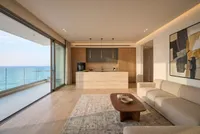


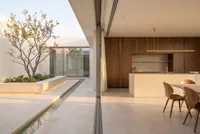

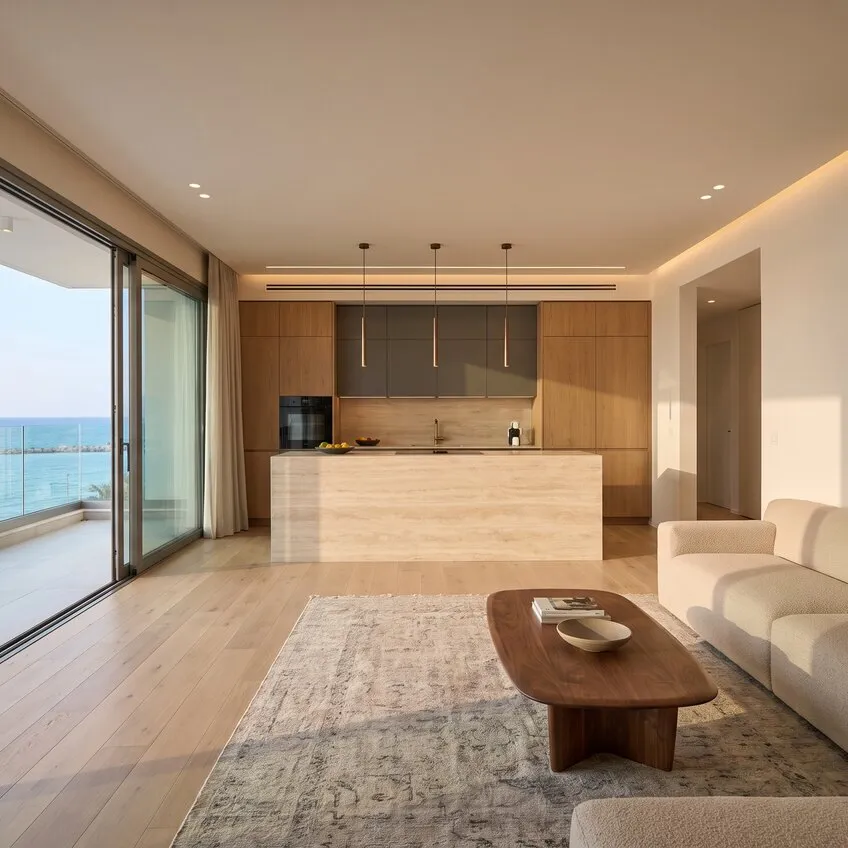

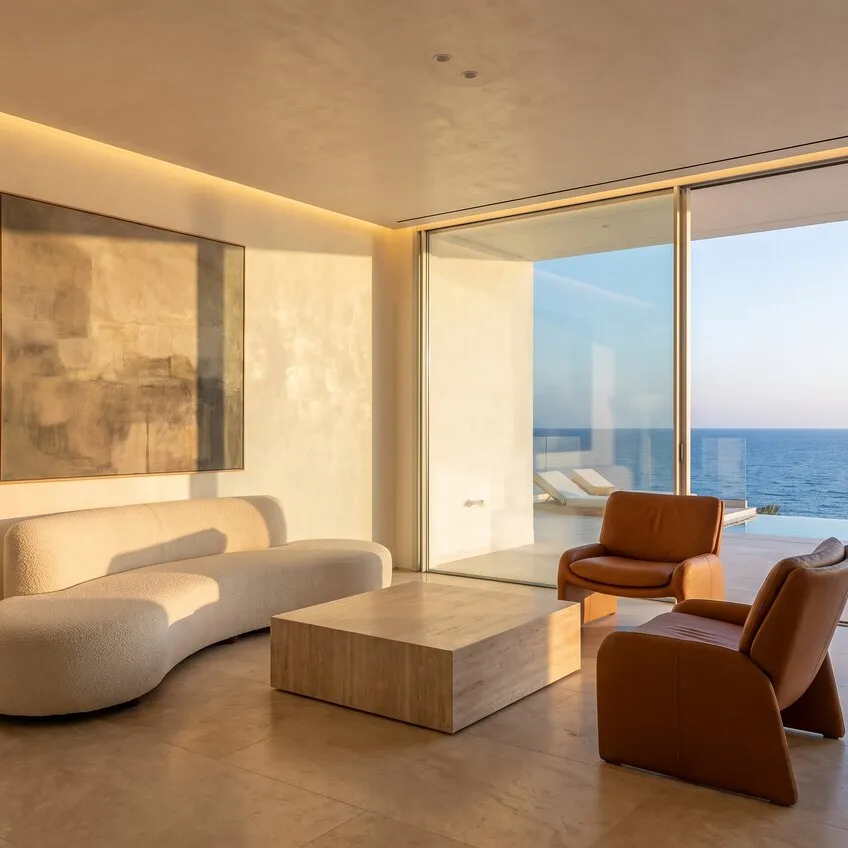
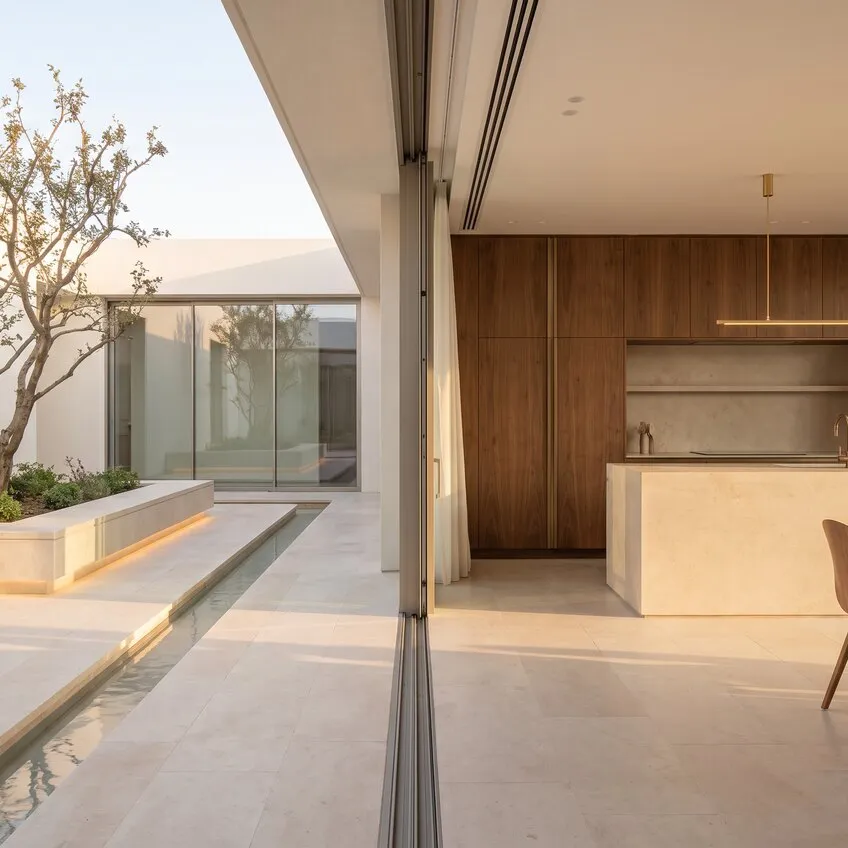
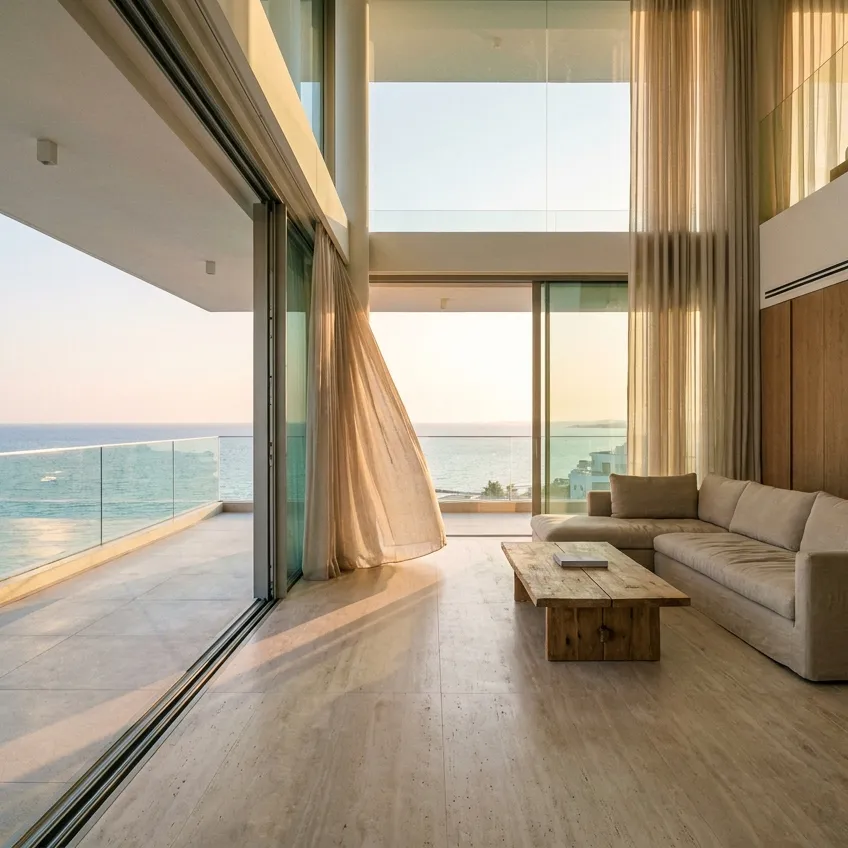
Balcony glazing in Cyprus turns an open balcony into a space protected from dust, wind and winter rain, ready for relaxing, a small home office or a winter garden. Cozy brings together specialists and companies who glaze and finish existing balconies, loggias and verandas in flats and villas. Their portfolios show balconies they have already enclosed, which is the best way to judge frames and junctions before you call.
This category covers balconies and loggias. To replace ordinary windows or a balcony door, see window installation and repair, and for sun-protection shutters and blinds, see shutters, blinds and gates.
Survey and condition of the base
Before glazing, the specialist measures the balcony all round and checks the slab, the railing and the walls the system will be fixed to. Cracks, rusting rebar, loose screed or a weak railing must be dealt with before installation: glazing adds load and will not fix defects in the base by itself. The weight of the system and the fixing method are chosen to suit the slab; if in doubt, bring in a structural engineer.
Choosing a glazing system
Choose the system to suit the purpose and the climate:
- frameless glazing: sliding or folding glass panels that open the balcony almost completely in summer;
- sliding aluminium frames: simple non-insulated glazing against dust, wind and rain;
- insulated glazing with thermally broken aluminium or uPVC, if the balcony is used all year as living space;
- solar control or tinted glass for south- and west-facing sides.
Junctions and weatherproofing
The weakest points are where the system meets the slab, the wall and the ceiling. The bottom track needs drainage so that driving rain runs outside, and the joints are sealed with a UV-resistant sealant. Keeping ventilation is important: in the heat an enclosed balcony overheats quickly, and near the sea condensation forms on the glass and walls without airflow. Discuss with the specialist which panels will open and how you will clean the glass from outside.
Restrictions and finishing scope
Glazing alters the facade, so ask your building manager and the municipality (or a licensed professional) whether your block permits it and whether you need approval first. Joining the balcony to a room and removing a wall is a separate matter, decided only with an engineer and after checking permits.
Finishing a balcony usually includes levelling and tiling the floor, finishing the walls and ceiling, lighting and sockets, and insulation with insulated glazing. Before insulating, make sure the base is dry, there are no leaks and the drainage works. Otherwise moisture will be trapped in the structure.
Picking a balcony glazing installer
Look for experience glazing similar balconies: the portfolio should include comparable projects, and reviews should show how the system copes after rain. Compare ratings and ask what the price includes: removing the old railing, installation, sealing, finishing, waste removal.
Before you get in touch, take photos of the balcony from outside and inside. Add close-ups of the slab, railing and wall junctions, the perimeter dimensions and height, and the floor level. Explain how you want to use the balcony: as an open terrace, an enclosed loggia or part of a room.