
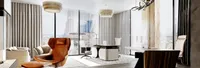
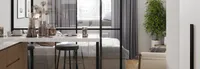

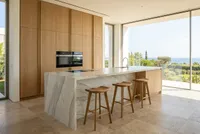
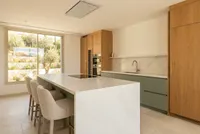


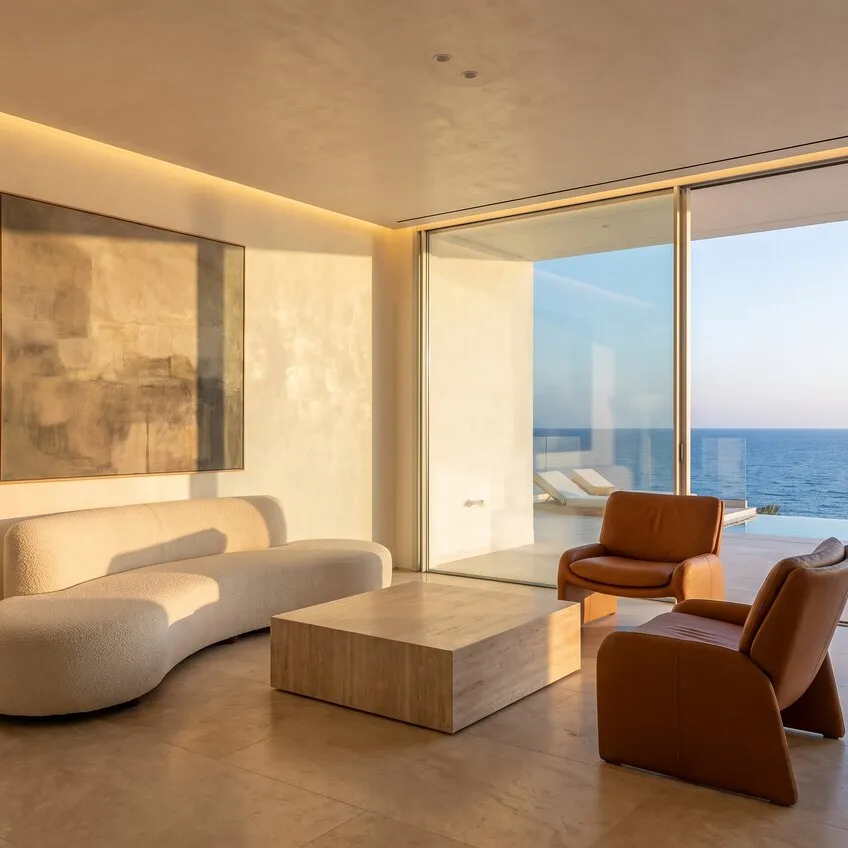
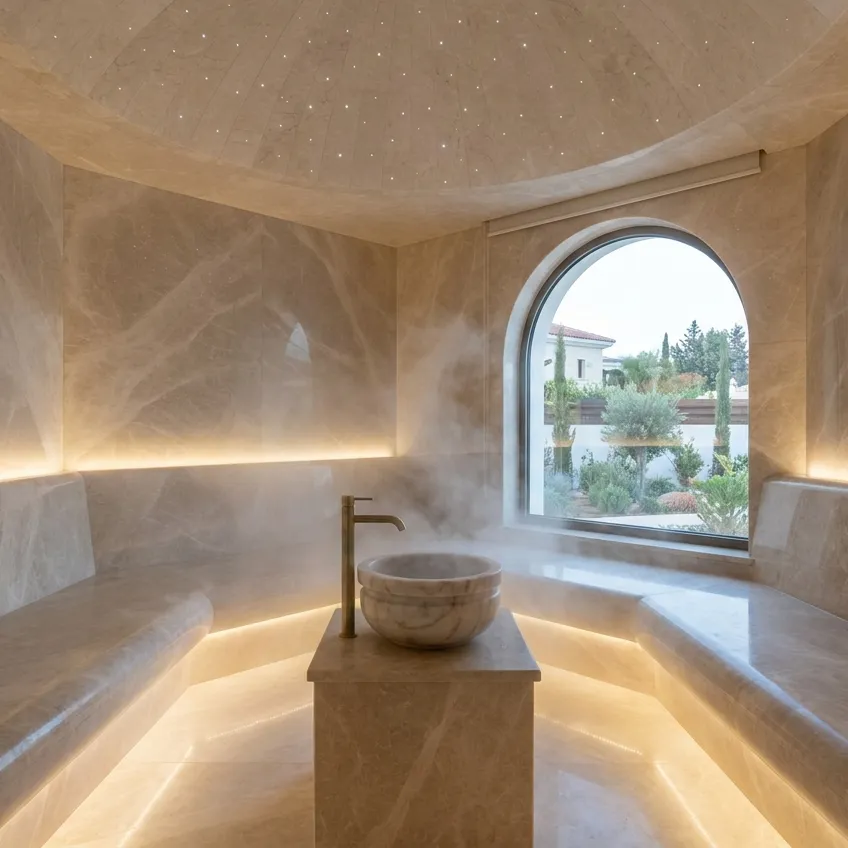
Custom bathroom furniture in Cyprus means vanity units, tall cabinets, mirror cabinets, shelving and niche storage built to fit a particular room rather than picked from a standard range. It makes sense when the bathroom is small or irregular, the basin is non-standard, the pipes come out in awkward places, or you want all the storage in one matching set. Cozy lists cabinetmakers and joiners who design and build bathroom furniture: their profiles show photos of finished work, client reviews and “from” prices.
No room is tougher on furniture than the bathroom: steam after a shower, splashes, temperature swings and cleaning with household chemicals. In Cyprus there is also heat and high humidity, especially in seaside apartments where the bathroom often has no window and relies on an extractor fan. That is why boards, edging and hardware are chosen with a margin, and the carcass is raised off the floor or wall-hung. Ventilation inside the units is planned too. That way moisture and damp smells do not linger in closed cabinets.
Your furniture maker measures up, proposes the design and materials, then builds and fits the units. The tap and waste are usually connected by a plumber, and a stone or quartz worktop comes from a separate fabricator. It helps when all three agree on dimensions in advance. If the mirror cabinet has built-in lighting or a socket, an electrician runs the supply before the walls are finished.
What custom bathroom furniture involves
- Measuring the bathroom: walls, niches, water and waste outlets, sockets, the door swing and the towel radiator; during a renovation, measuring after the walls are levelled or working from the drawings.
- Design: wall-hung or floor-standing vanity, basin height, carcass depth, drawers or doors, tall unit, mirror cabinet and lighting.
- Materials and edging: moisture-resistant boards, laminate, veneer or solid wood with a protective finish, edging on every exposed edge, hardware with an anti-corrosion coating.
- Basin and pipe access: a cut-out for the trap, a U-shaped drawer around the waste, a removable back panel or an access hatch.
- Fixing: anchors suited to the wall type; for a wall-hung vanity, checking the wall or fitting a concealed frame; adjustable legs for floor-standing units.
- Handover: aligned fronts and even gaps, smooth-running drawers, sealed joints between the vanity, basin and wall.
How to choose a bathroom furniture maker
Look specifically for bathroom or other wet-area furniture in the portfolio: kitchen experience helps, but a bathroom has its own details. In reviews, check how the furniture looks after a year or two: no swollen edges, no rusty hinges. Ratings and photos of work help you compare makers; in the chat, find out which boards and edging they suggest and who is responsible for the basin cut-out. Also check whether delivery, installation and packaging removal are included in the price.
Your first message should carry the bathroom dimensions and a few photos. Add the basin and tap models or links to them, a plan of the water and waste outlets if the renovation is still under way, and examples of furniture you like. With that brief in a job post, every maker quotes for the same set of units, which makes the offers easy to compare.