
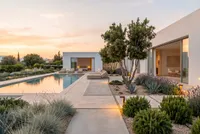
Landscape supervision means the designer, or the design team, follows the garden project through to completion. The landscape designer or architect visits the site at key stages, sets out the plan on the ground, checks plants and materials, answers the contractors’ questions and makes sure the result matches the design. The service is for owners of houses and villas or commercial properties in Cyprus who already have a landscape design or are having one prepared. On Cozy, specialist profiles show portfolios, reviews, ratings and prices.
Even a detailed design cannot answer every question that comes up on site: the levels turn out to be different, the specified plant is not available at the nursery, the irrigation route runs into rock. Without the designer, the crew makes those calls, quickly but not always in favour of the original idea. Supervision is especially useful if you do not live on the island full-time and cannot visit the site yourself, or if several crews work on the plot at once (earthworks, paving, irrigation and planting).
Supervision does not replace the contractor and does not include regular garden maintenance after handover. Those are separate services in the landscape design and outdoor works section. Engineering checks of retaining walls, structures and soils are also carried out separately, by qualified engineers.
What landscape supervision includes
- setting out the plan on site: marking paths, patios, beds and planting positions for large trees;
- checking levels and falls so that water drains away from the house and paths;
- inspecting plants at the nursery or on delivery: species, size, canopy shape and root condition;
- checking that paving and edging, as well as topsoil and mulch, match the specification;
- keeping the sequence right: services and irrigation first, then paving, then planting and lawns;
- site visit notes, answers to the crew’s questions and drawing revisions.
The number of visits is agreed in advance: typically the designer comes at the start, before hidden work (irrigation pipes, drainage, path sub-bases) is covered up, and during planting. Between visits, communication with the contractor runs through photos and messaging.
Plant substitutions and design changes
In the island’s hot, dry climate, substitutions are routine: some plants are unavailable, others struggle with the sun or wind in a particular spot. A good supervising designer proposes an equivalent replacement that is drought-tolerant, with a similar form, colour and mature size, and records it in writing. The contractor agrees any deviation from the design with the designer and the client before carrying it out, not afterwards.
Who should supervise your garden works
Supervision works best when it is done by the author of your design. If someone else prepared the design, look for a landscape designer or architect with experience of supervising built gardens: the portfolio should show not only visualisations but photos of work in progress and finished plots. Ask how many visits are included in the price and how issues are recorded; the distance to your site matters too, as it affects how often the designer can come.
For your order, prepare the design itself (the plan, planting schedule, paving and irrigation drawings), along with the contractor’s contact details, the work schedule and site photos. Say how many visits you expect and at which stages.