






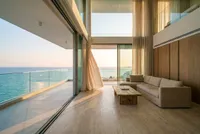
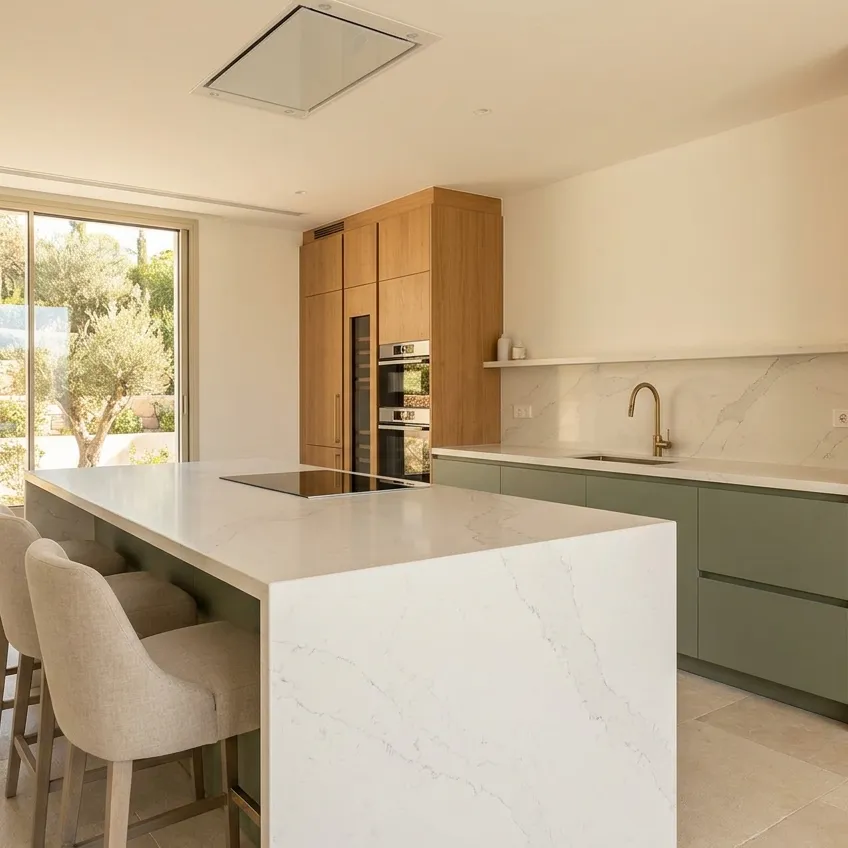

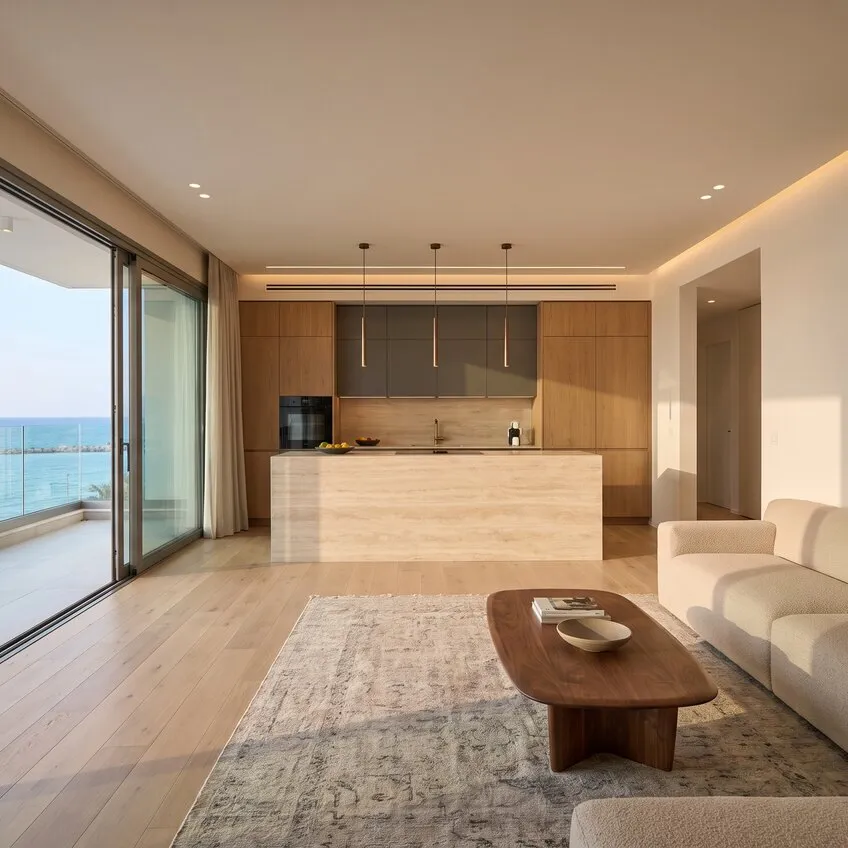

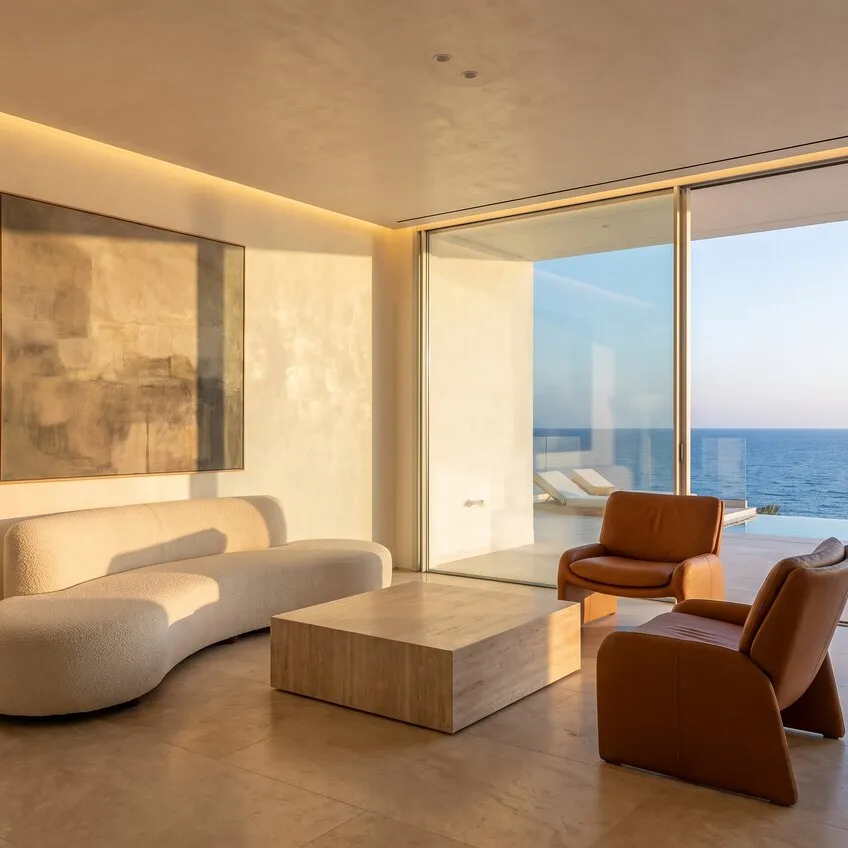
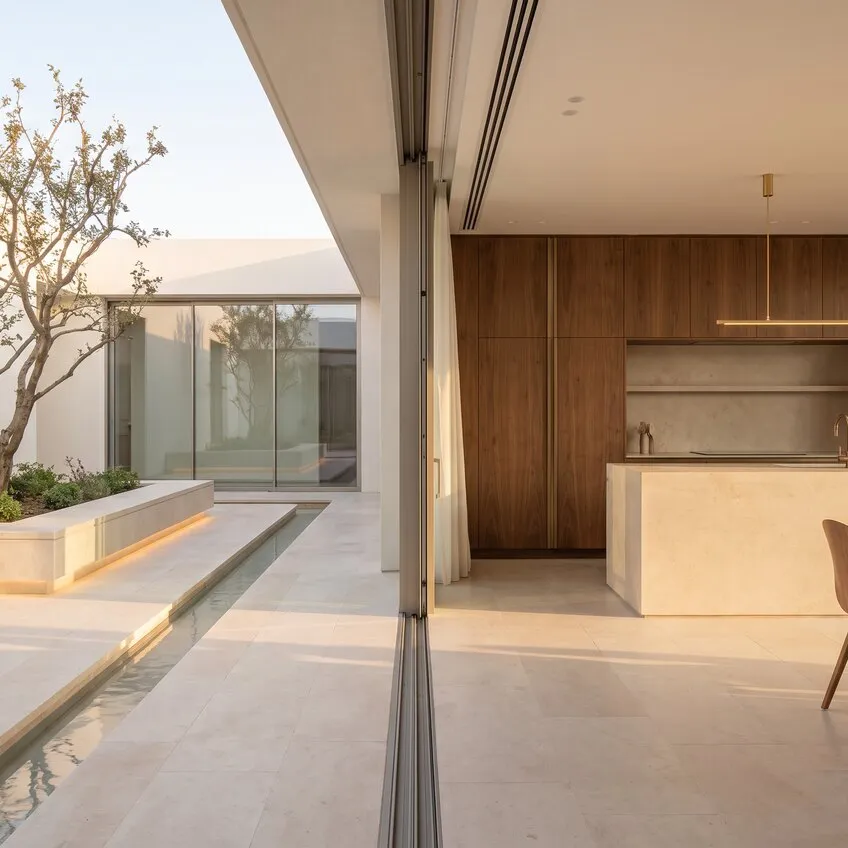
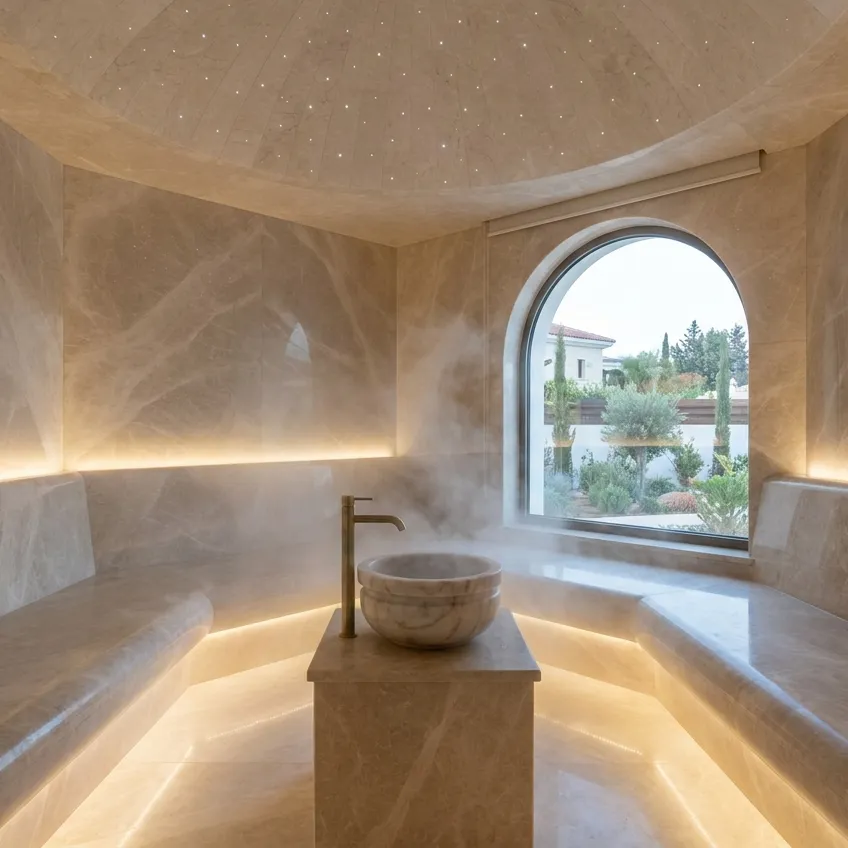
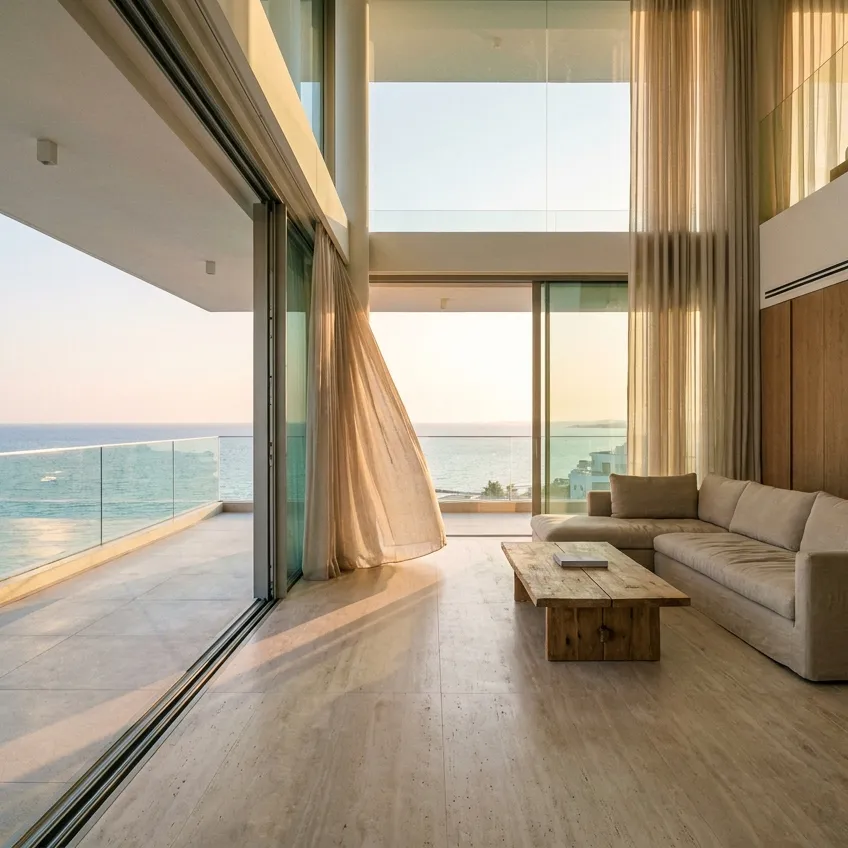
Interior procurement means buying everything your design project specifies (furniture, light fittings, sanitaryware, finishing materials, textiles and decor) to the schedules, on time and within budget. Cozy brings together interior designers and procurement specialists in Cyprus who handle supply for flats, villas, rental apartments, offices and commercial spaces. Their profiles show portfolios of completed projects along with reviews and service prices.
A design project shows how the interior should look, but it does not order anything. In practice, dozens of items come from different suppliers with different lead times, and some are discontinued by the time you buy. A procurement specialist turns the drawings into a working purchase list, tracks the orders and makes sure everything needed is on site for installation, with nothing missing and nothing extra. For seaside properties, the specialist also checks that materials, textiles and fittings can cope with humidity and salt.
This service is especially convenient if you do not live on the island full time, are preparing a property for rent or opening an office and do not want to spend weeks searching for and checking items. It differs from one-off shopping help: procurement follows the project and covers the whole property, not a single sofa or chandelier.
Furniture, lighting and finishes schedules
The work is built on schedules. These list items with product codes, dimensions, colours, quantities and locations. They are used to compare supplier quotes, build the budget and check that nothing is forgotten: ironmongery, fixings, lamps, skirting, spare tiles for cutting. If the project has no schedules, they are drawn up in the first stage. A good schedule also records the lead time of each item, showing what to order first so that made-to-order furniture does not delay your move-in.
What interior procurement includes
- reviewing the project and preparing or checking furniture, lighting, sanitaryware and finishes schedules;
- requesting quotes, comparing suppliers and agreeing the budget with you;
- finding equivalent substitutes when an item is unavailable or over budget;
- placing orders and tracking manufacturing lead times and delivery schedules;
- checking deliveries for completeness and damage, and coordinating delivery and installation.
Agree in advance who is responsible for what: who pays for the goods (you directly to suppliers, or the specialist); who receives deliveries and checks the boxes; who books assemblers and installers; and what happens if an item arrives damaged. Procurement and fit-out coordination do not include building work: finishes and building services are handled by contractors, while designer supervision makes sure the interior matches the project.
Choosing a procurement specialist
Look for experience with similar properties: a flat, a villa, a rental apartment or an office, the volume of purchases and the budget level. Read reviews about how the specialist kept to deadlines and handled supply problems, and check the rating and photos of finished interiors. Ask how the service itself is charged (a fixed fee or a percentage of purchases) and how you will see the status of your orders.
Procurement starts from the design project or its schedules, so share those with the floor plan, your budget, the move-in date you are aiming for and a list of anything already bought.