



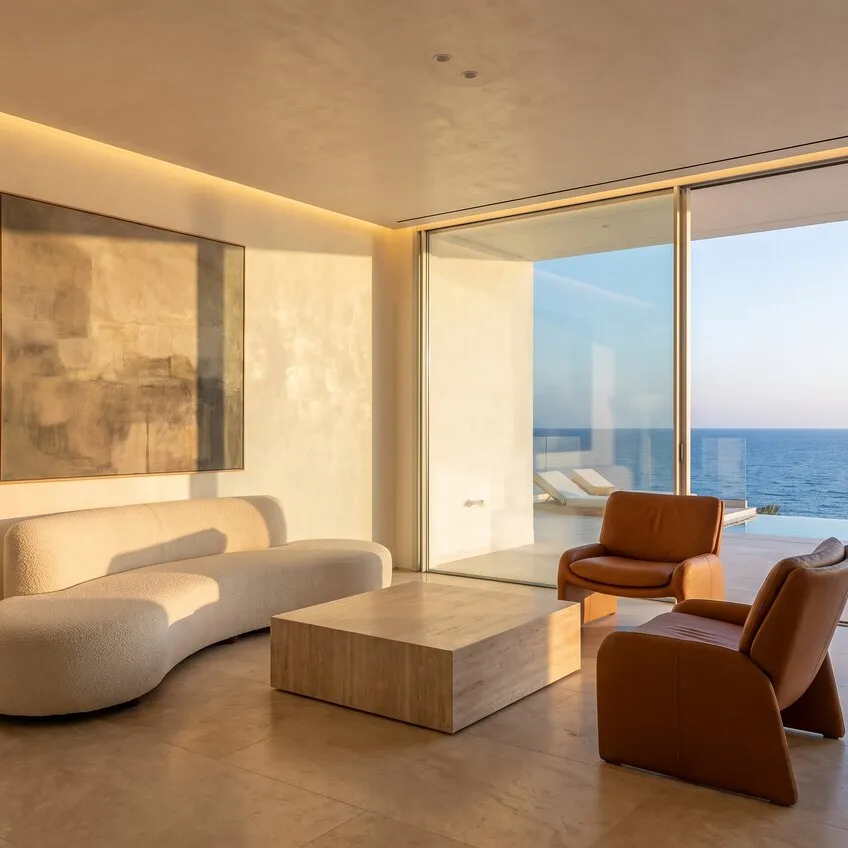
Mural painting in Cyprus turns an ordinary wall into the focal point of a room: a landscape in the living room, a fairy-tale scene in a kids’ room, an ornament in the hallway or a large mural in a café or hotel. Cozy brings together artists and decorators who create bespoke murals and hand-painted designs on walls, from a small piece above the bed to an entire hall.
People choose a mural when they want something no wallpaper catalogue offers: artwork sized to the wall, the light and the furniture, with the motifs they love. The style is agreed with the artist from the start: Mediterranean landscapes, olive branches, sea themes, abstraction, botanicals or geometry. In commercial spaces, a mural often becomes part of the brand and a backdrop for guests’ photos.
It helps to tell murals apart from related work. Plain wall painting in one or several colours is done by plastering and painting specialists, while mouldings and wall panels belong to separate categories. The artist often works alongside them: the wall is prepared and painted first, then the artwork goes on top.
Sketch and composition
The work starts with a sketch. The artist studies the room, the light, the furniture layout and where the wall is seen from most often, then proposes a composition and colour palette. Usually this is a colour sketch or a mock-up of the design on a photo of your wall. This is the stage to discuss everything: scale, details, the number of revisions and what will stay unchanged when the design is transferred. An approved sketch is the main reference for both sides.
Wall surface and painting technique
A mural lasts only as well as the wall is prepared: the surface must be flat, dry and free of flaking paint. Techniques vary: acrylics by brush, airbrush, stencils, textured and relief elements, faux fresco. If a wall shows signs of damp, which is not unusual near the sea, the cause is fixed first, or the artwork will suffer. For kitchens, bathrooms and outdoor walls, durable paints and a protective varnish are used.
What the work includes
- a site visit, measurements and discussion of the idea;
- a colour sketch and agreed palette;
- preparing and priming the wall for painting;
- transferring the design and painting in the chosen technique;
- a protective coat and care instructions.
Ask who prepares the wall (the artist or a decorator), whether the protective varnish is included in the price and how to look after the mural. A varnish protects the artwork from dust, wiping and fading in the sun, which matters especially for walls near windows and on terraces.
Choosing a mural artist
Look through the artist’s portfolio: does it include work in the style and scale you want, and finished murals rather than sketches only? Close-ups say more than a wide shot of the room: zoom in on the detail, the crispness of the lines and how smoothly one colour blends into the next. Reviews will tell you whether the artist stayed true to the approved sketch.
Send the artist photos of the wall with its measurements and a few murals you admire. Describe the subject and colours you have in mind, and mention any deadline, such as the start of the rental season or an opening. Seeing how different artists respond to the same brief is the surest way to find a style you will enjoy living with.